LANDSCAPE AND WATER / DESIGNING /
LANDSCAPE AND WATER / DESIGNING /
Tlahuac Water Resilience
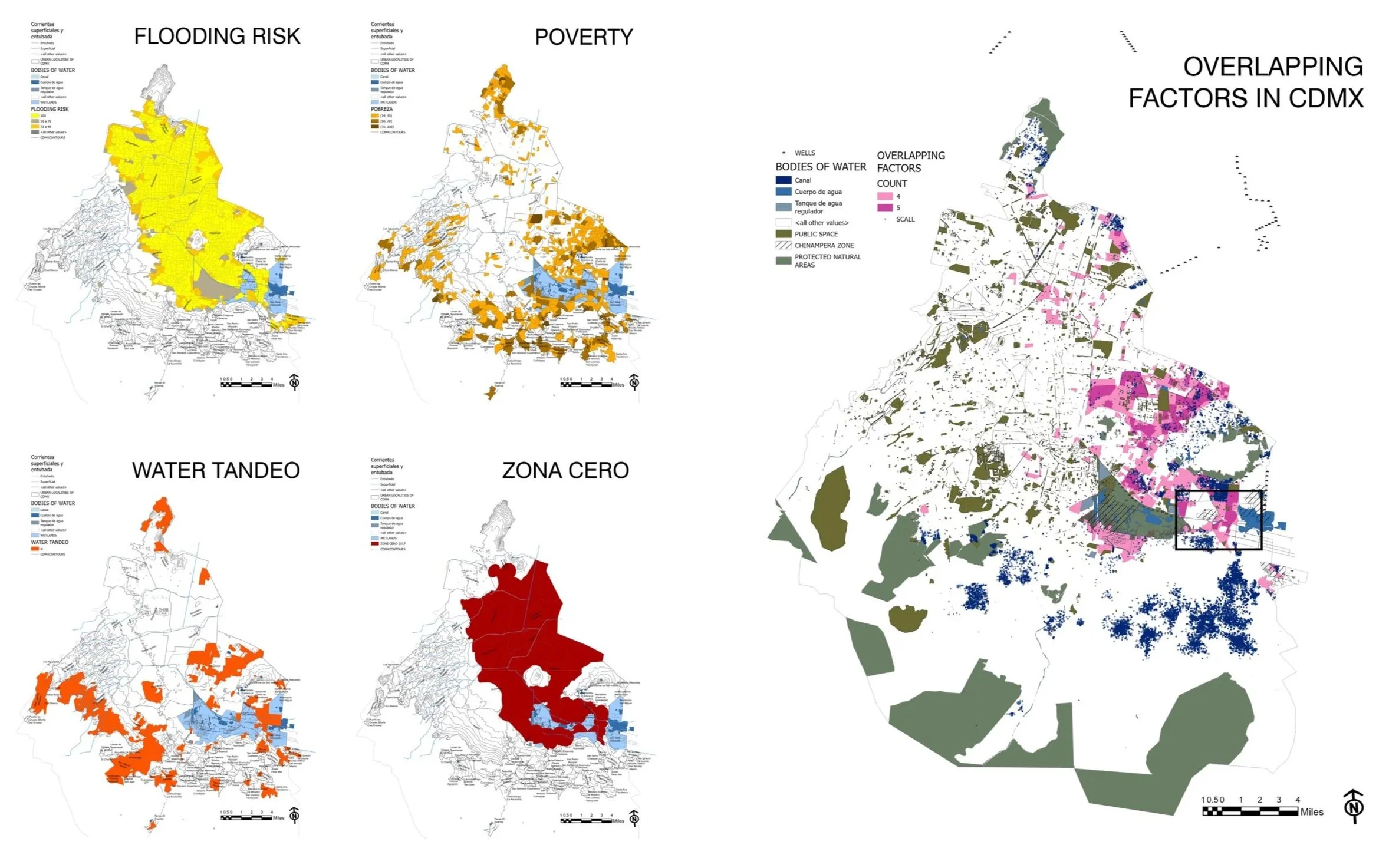
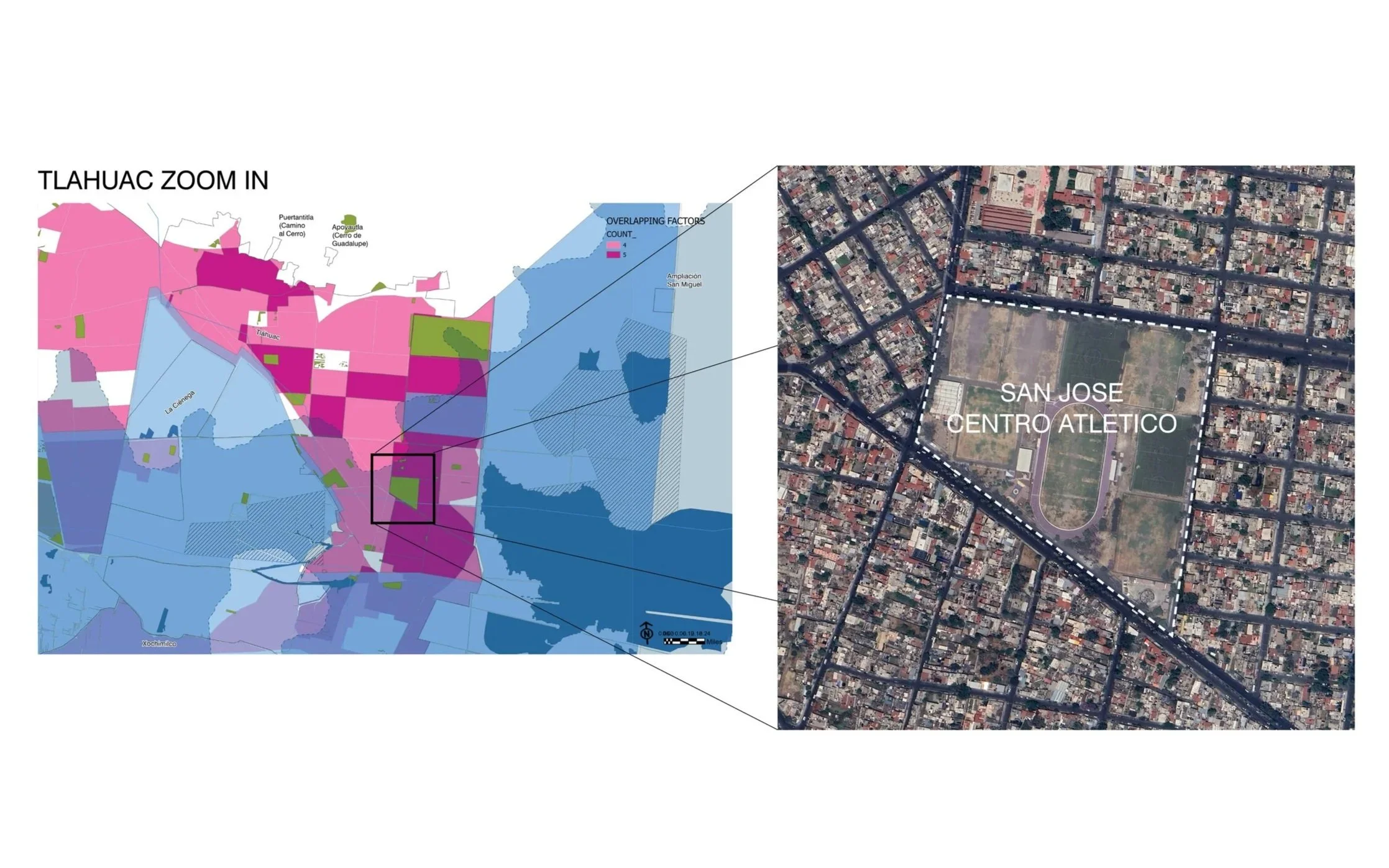
Tlahuac, a neighborhood located in the outskirts of CDMX right next to what remains of the historic wetlands and chinampas, experiences high vulnerabilities. This community is prone to flooding during high rainfall events; experiences water tandeos in times of drought; is located in zona cero, a zone known to have higher damage from earthquakes due to an unstable, dry ground; and has recorded high poverty rates. How can a spatial intervention help mediate some of these issues?
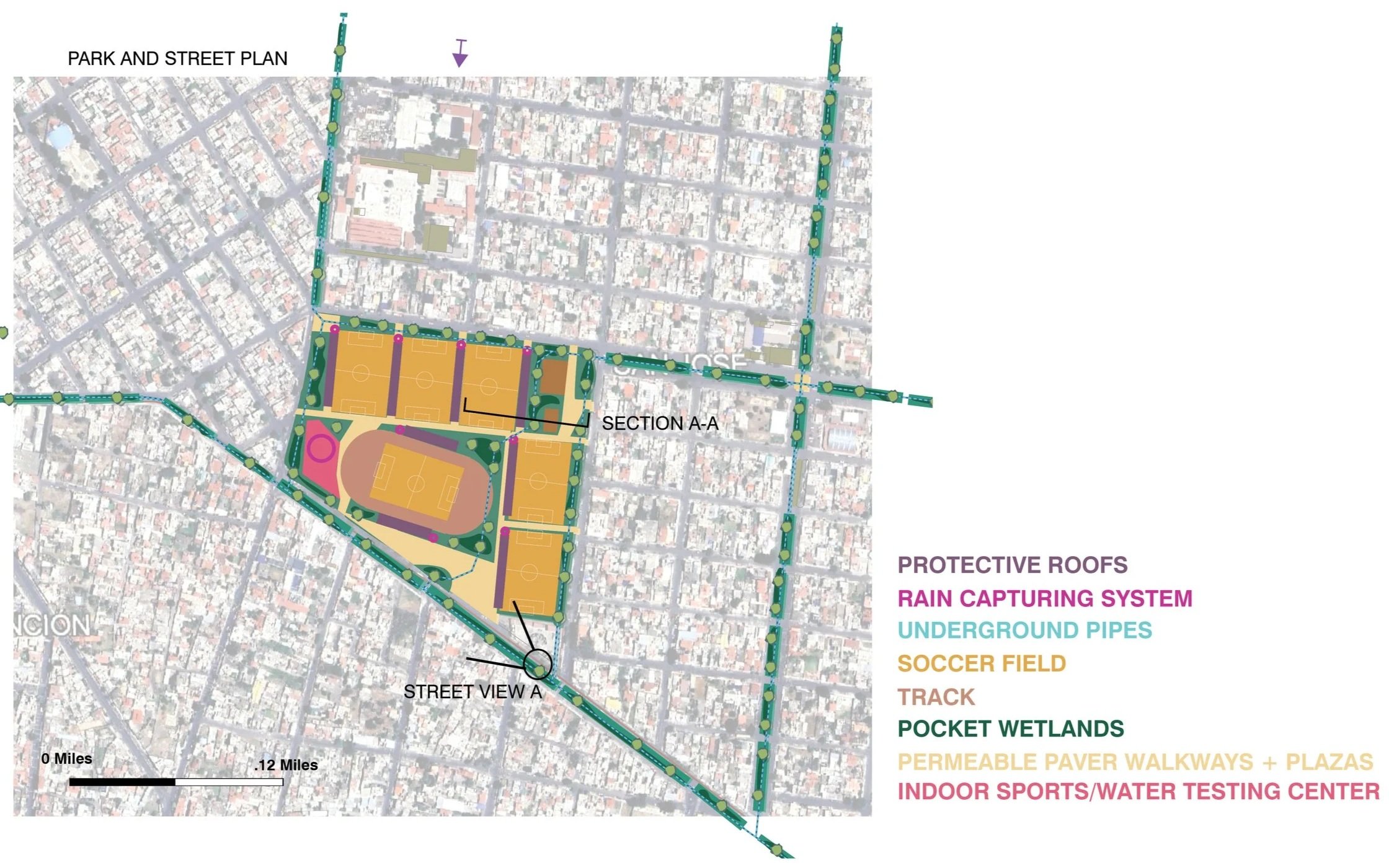
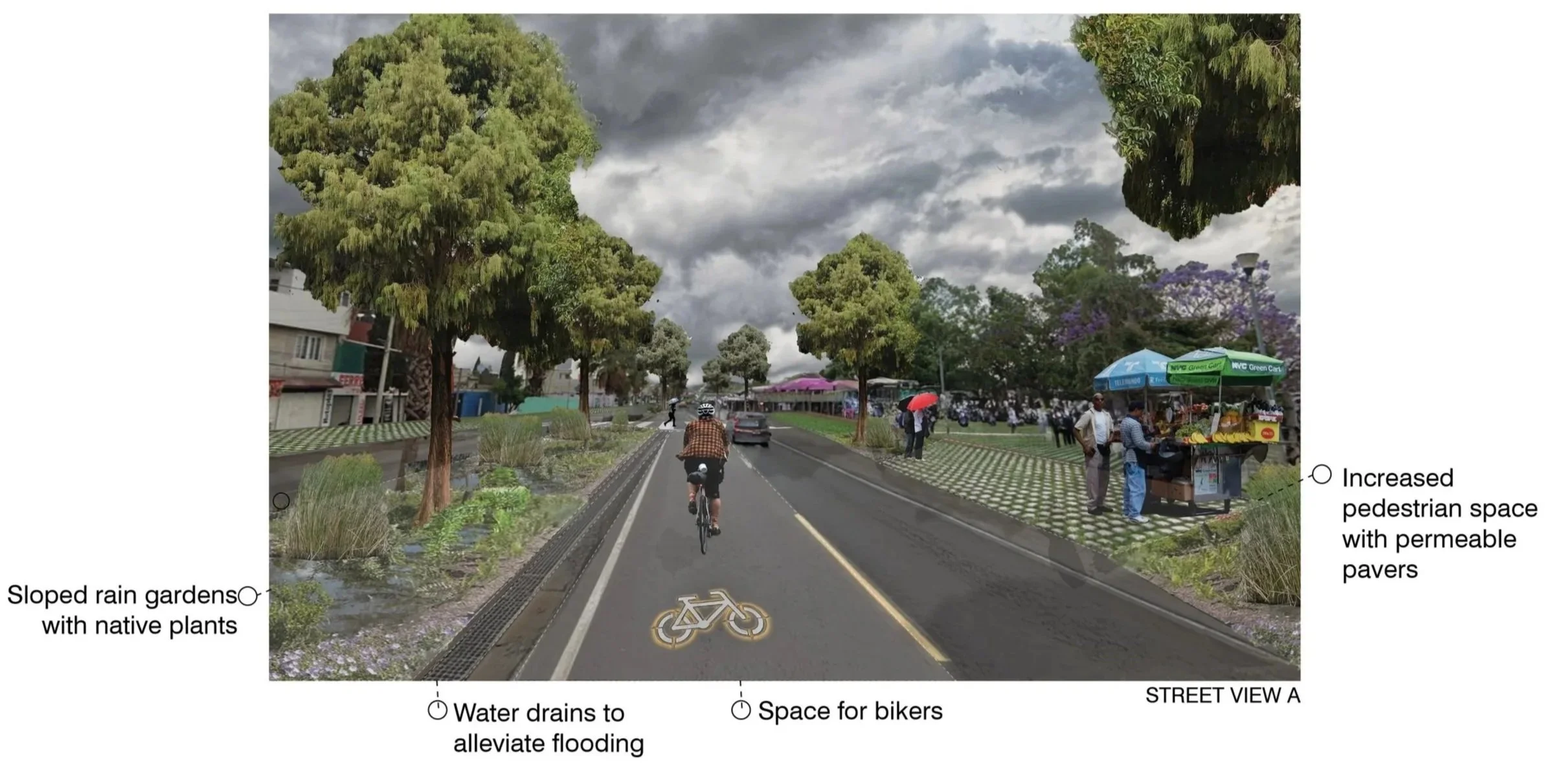
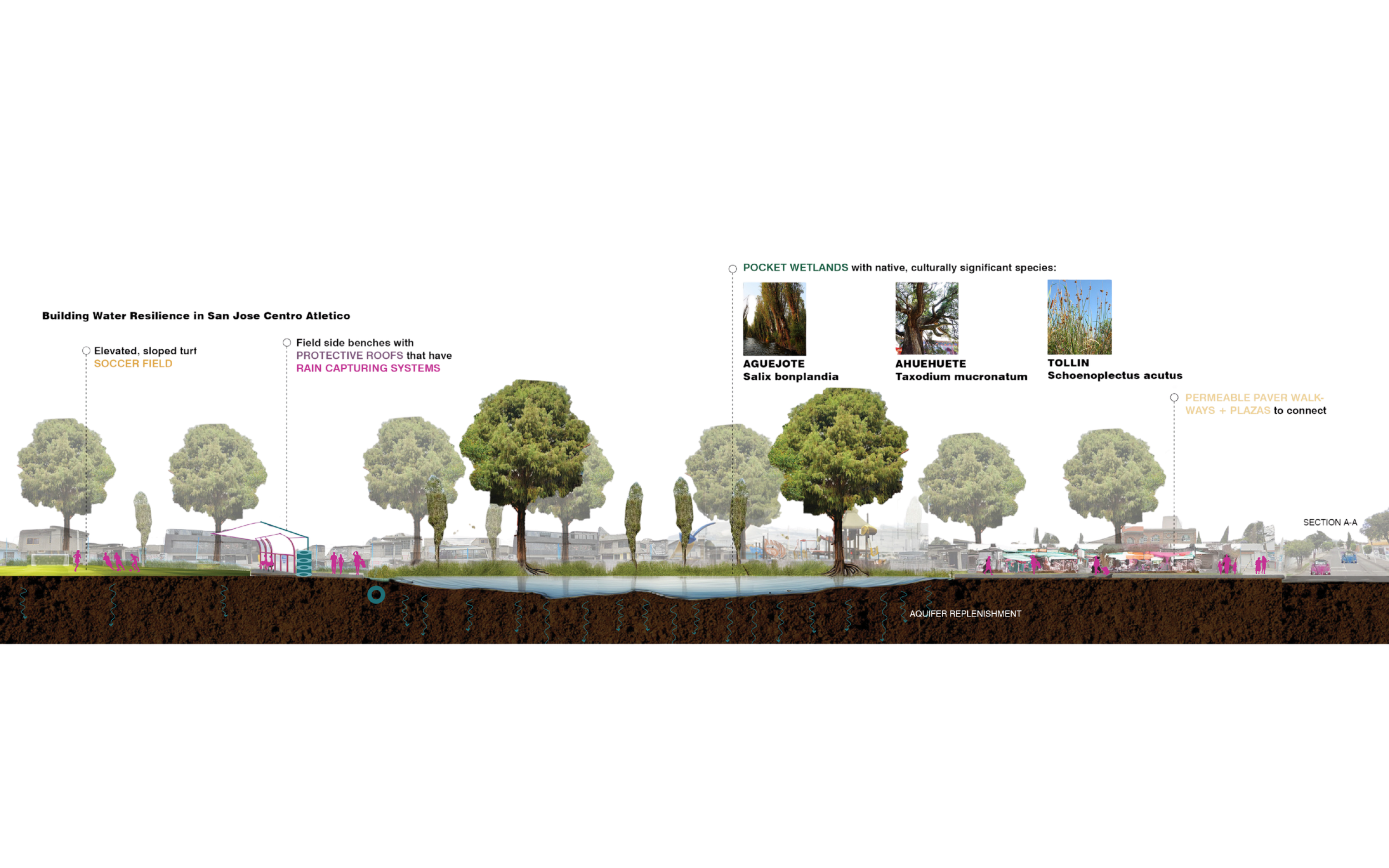
Located in the middle of the neighborhood, San Jose Centro Atletico and surrounding streets are my chosen site of intervention. The interventions aim to reconnect the neighborhood with the native culture and ecology of the place, while directly reducing water insecurity through rain collection and increase ground stability through aquifer replenishment. While this is a very small, localized intervention, it would be interesting to continue exploring more ways other neighborhoods could design public spaces to cultivate the lost historical connection to water that made Ciudad de Mexico once thrive.
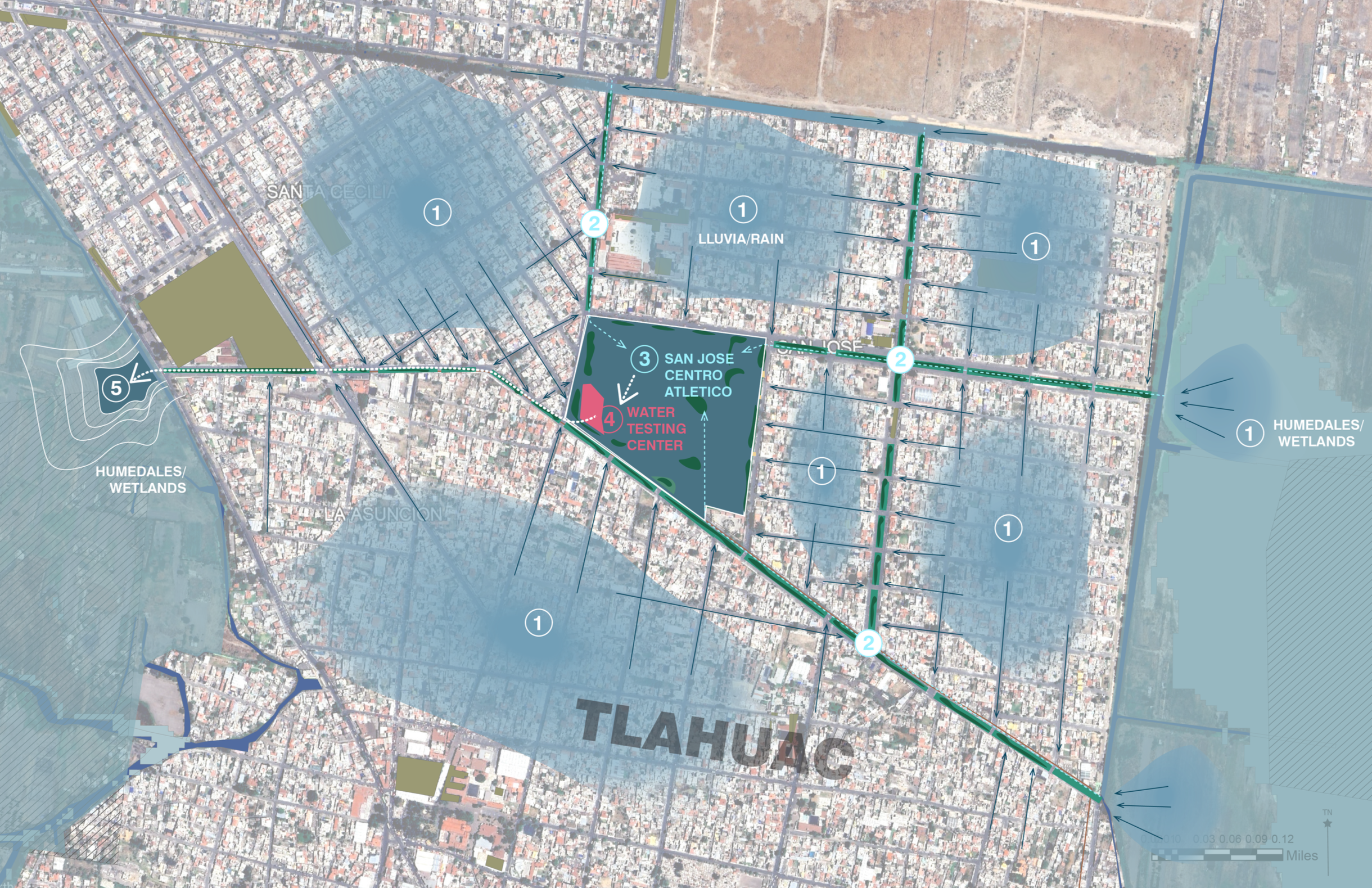
NEIGHBORHOOD STORMWATER PLAN
1. WATER FLOW FROM RAIN EVENT
2. RAIN GARDEN CAPTURES WATER AND FLOWS TOWARDS PARK
3. WATER RESTS IN WETLANDS
4. WATER IS TESTED
5. SURPLUS WATER FLOWS TO THE CHINAMPA SYSTEMS/WETLANDS
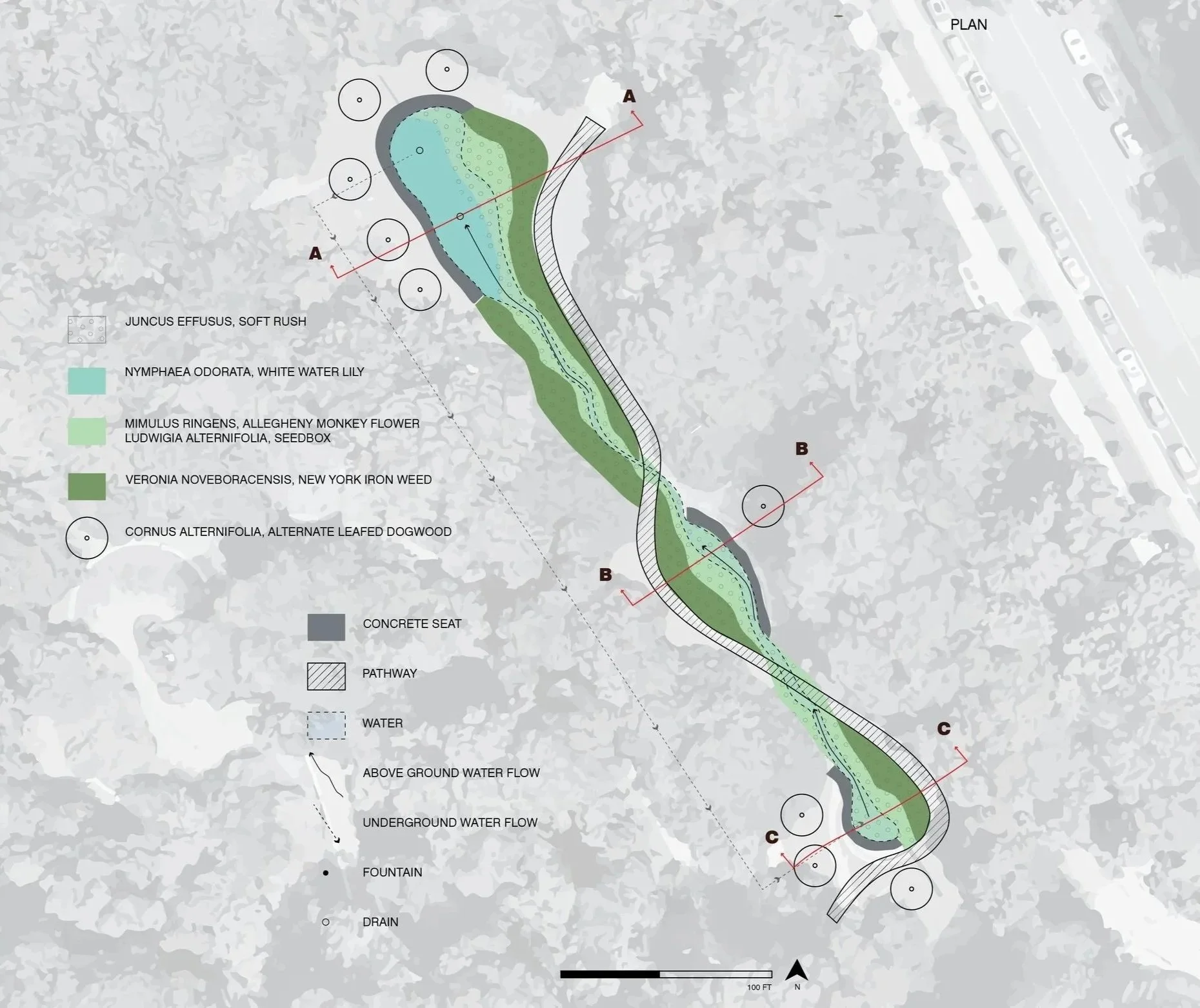
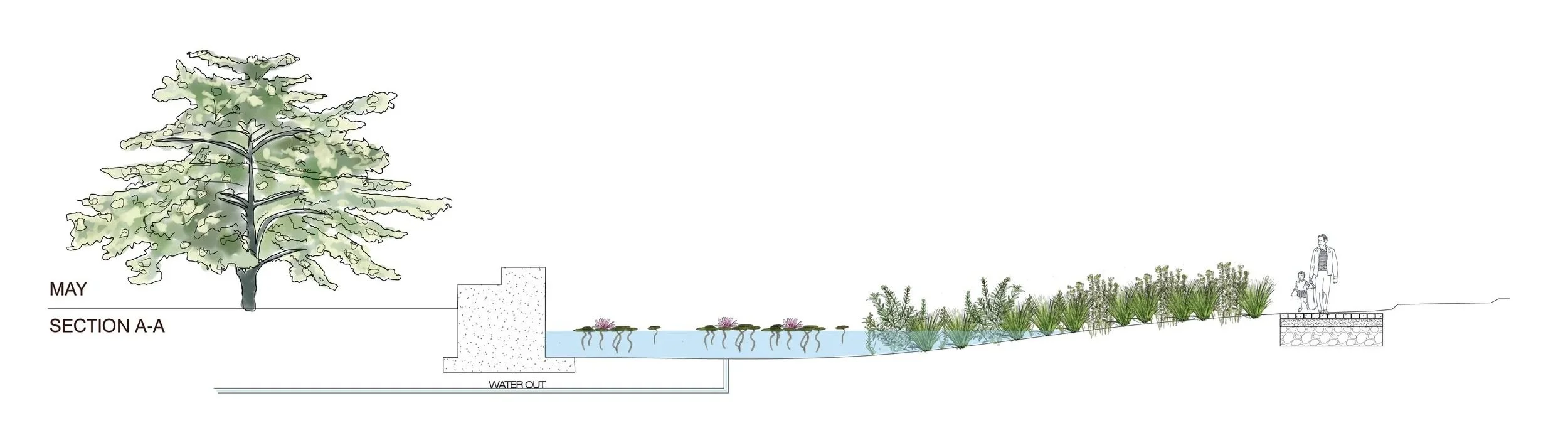
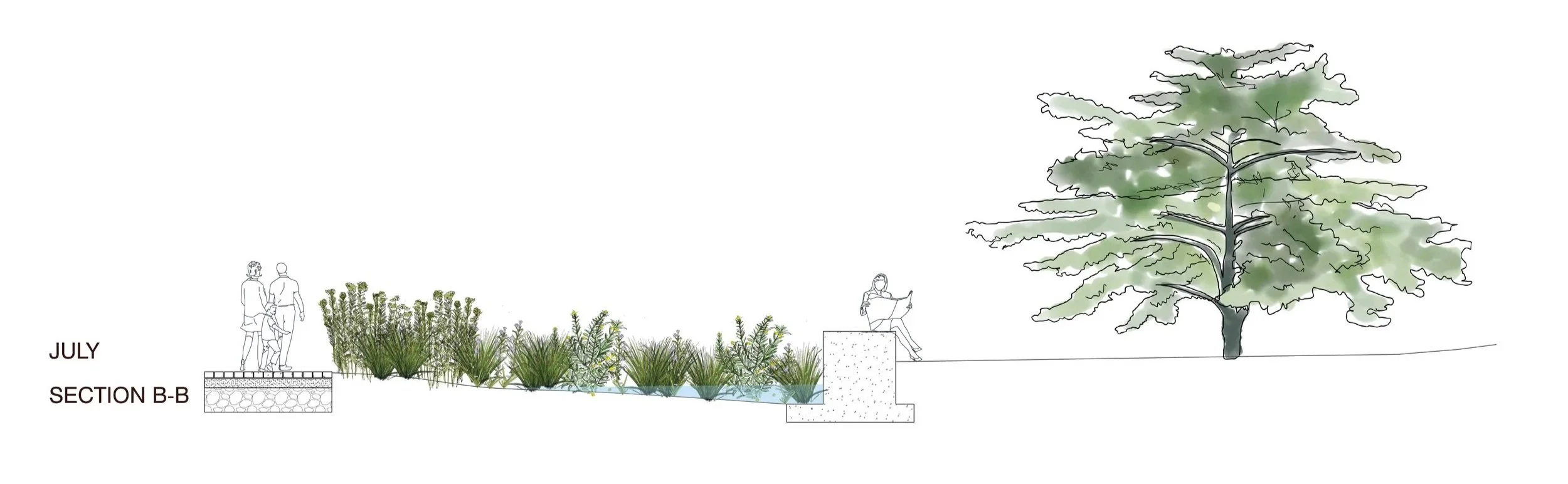
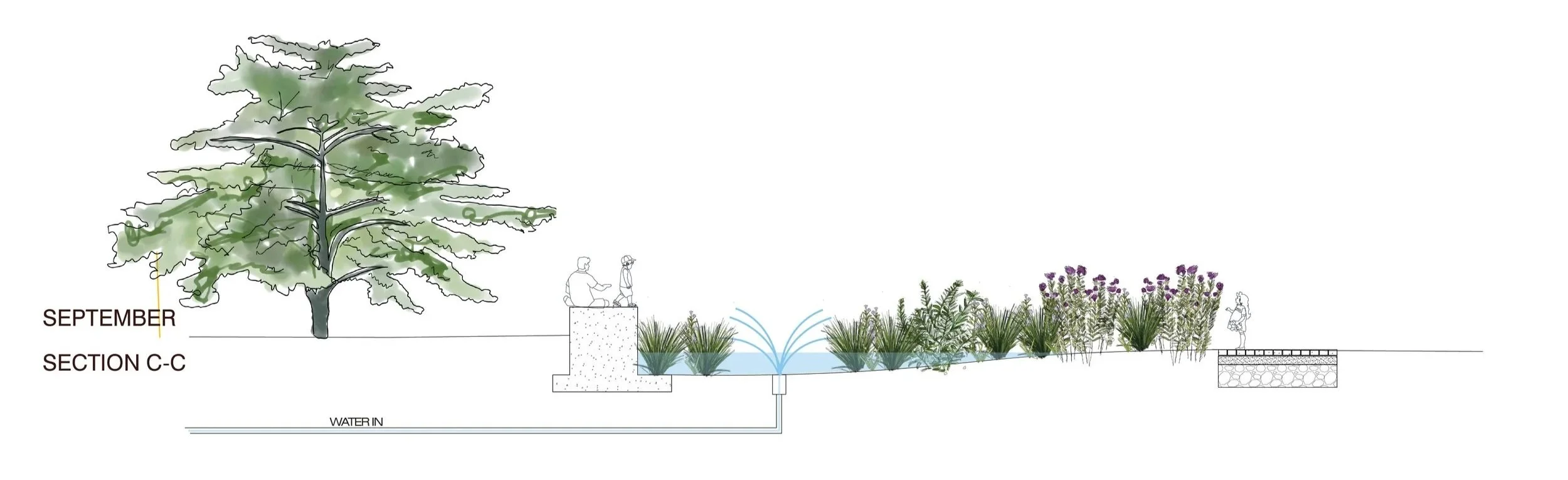
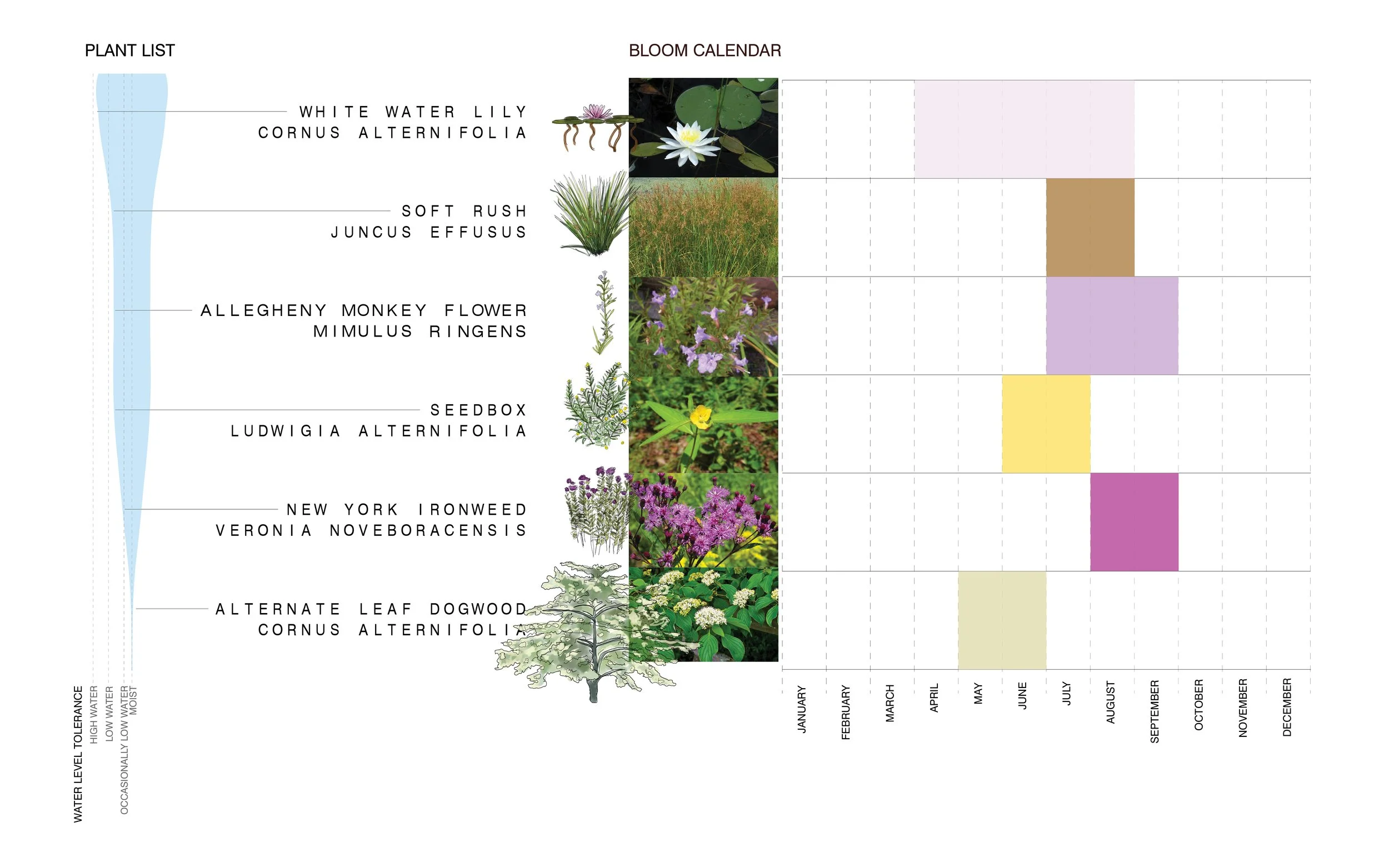
In its current day status, the Vale of Cashmere has three empty concrete fountains that slopes downward as it travels northwest. In reimagining the space, I wanted to activate the waterflow of these fountains and connect the long space. I imagined a fountain that would activate the stream and retain stormwater in the area, as well as a native plant gradient with different tolerance for water. The space would be a beautiful blooming spectacle from May to September.
Water Ecologies in the Vale of Cashmere
CREATED IN COLLABORATION WITH MARY DALY
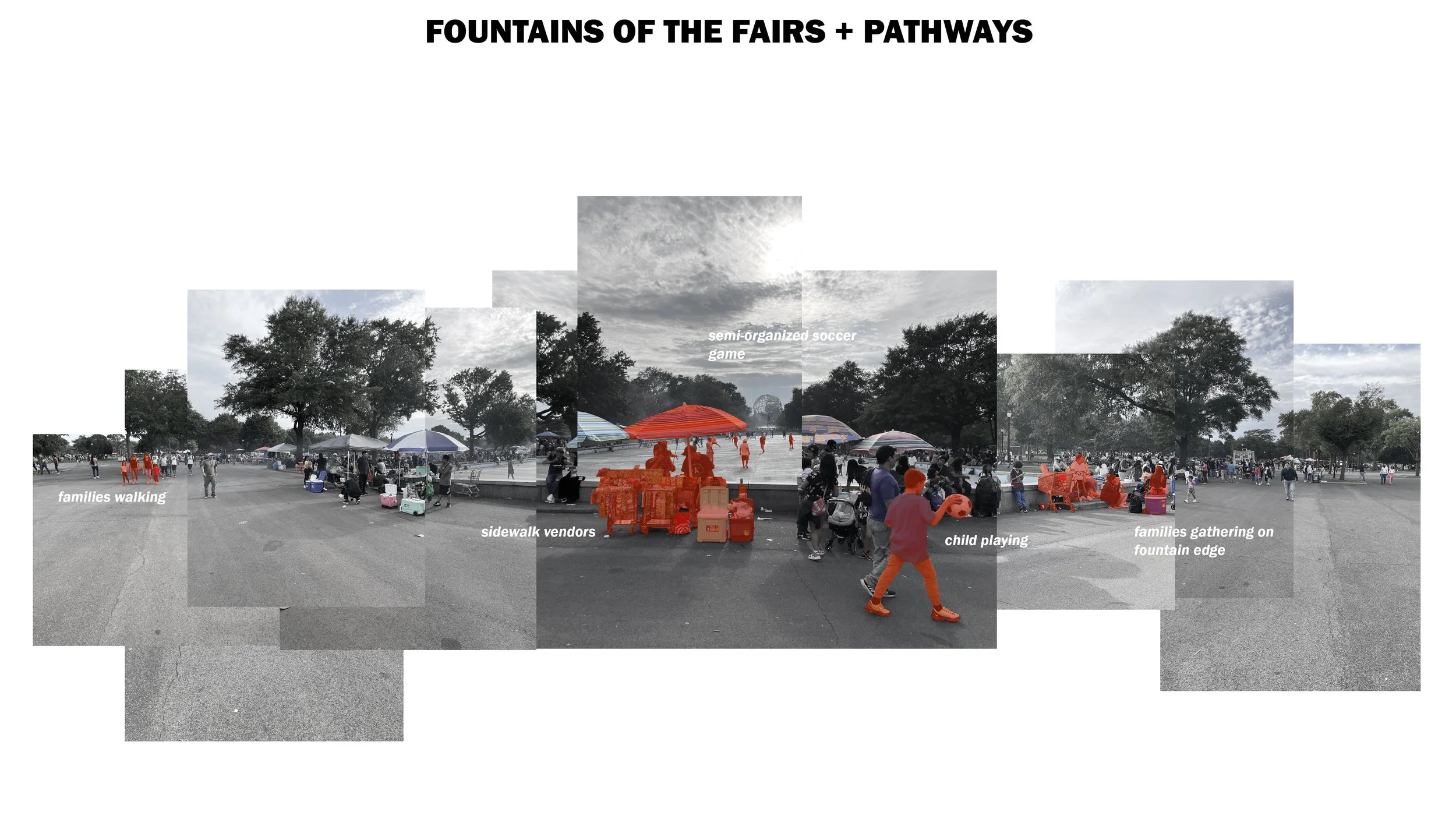
Flushing Meadows Corona Park in Queens, New York is a vast space with skeletons from the 1939 and 1964 World’s Fairs. Neighbors of the park have adapted the space to be a buzzing park full of life.
Taking into consideration that people will and have already made this park their own, my partner and I leveraged our research of water artifacts in the park and circles of influence of social change to create a process of design implementation that reduces barriers to access the park, develops a green community workforce, and results in a park that is part of a renewed water cycle that reduced stormwater flooding and celebrates water.
Reconnectiing FMCP
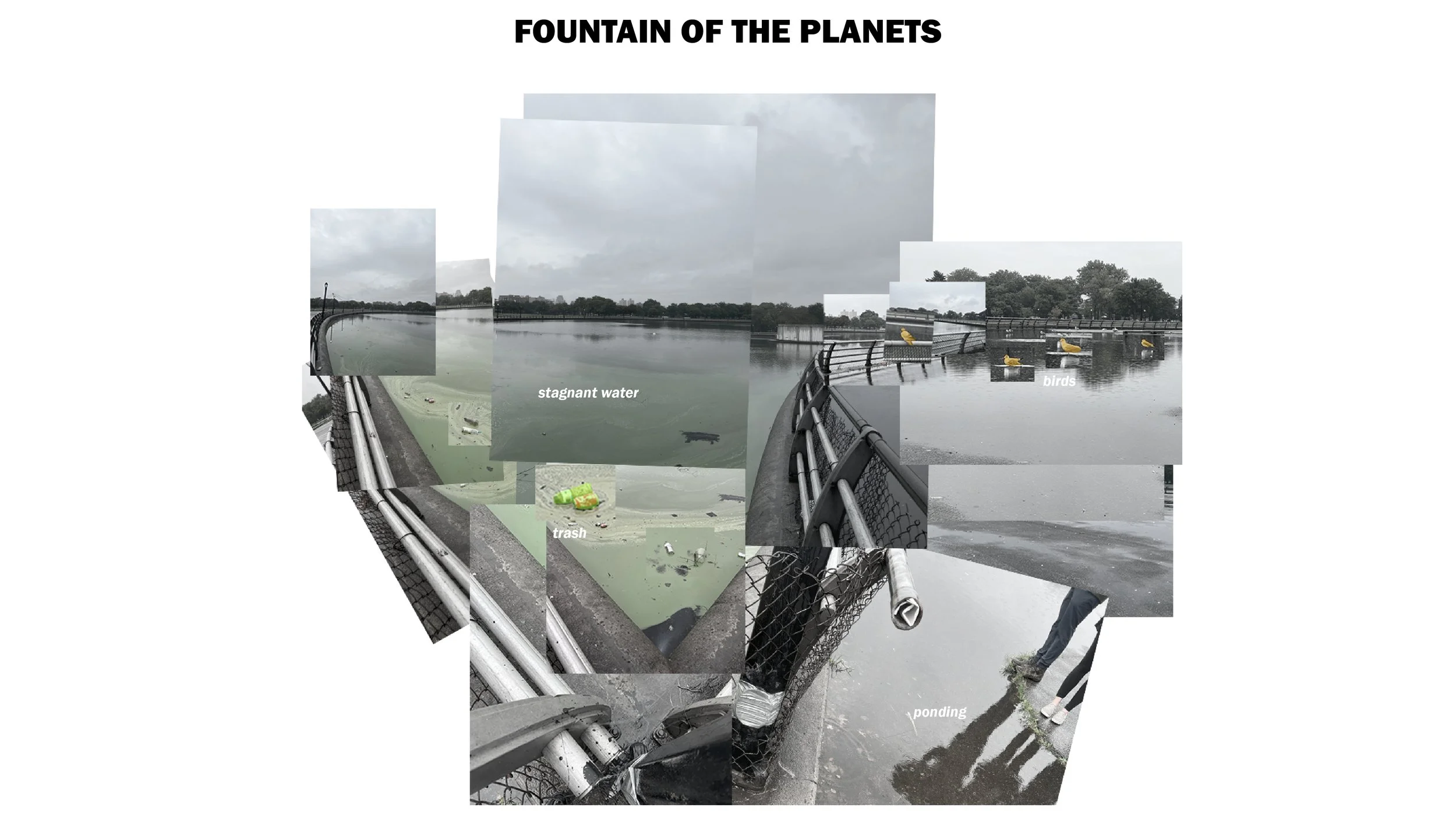
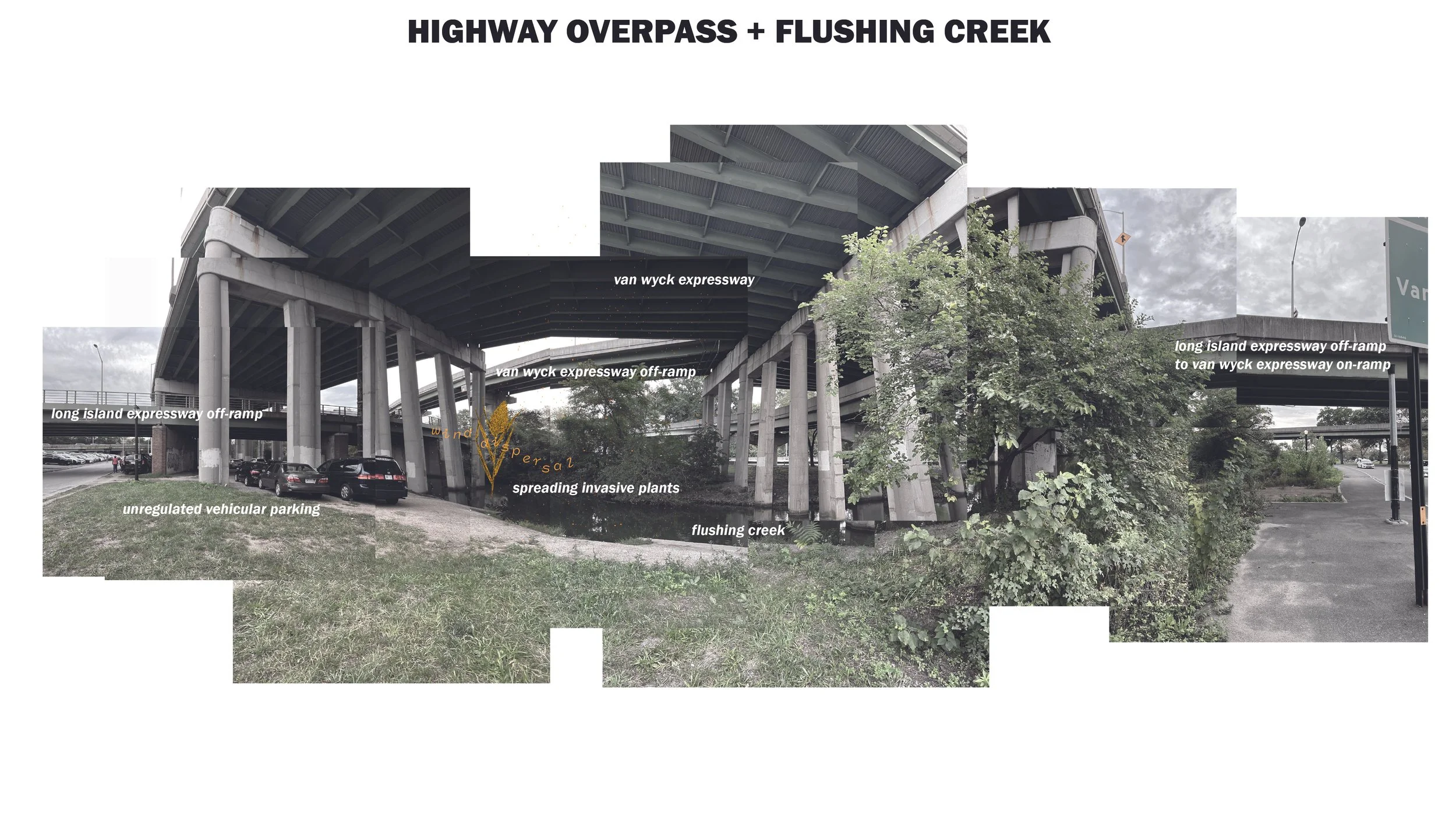
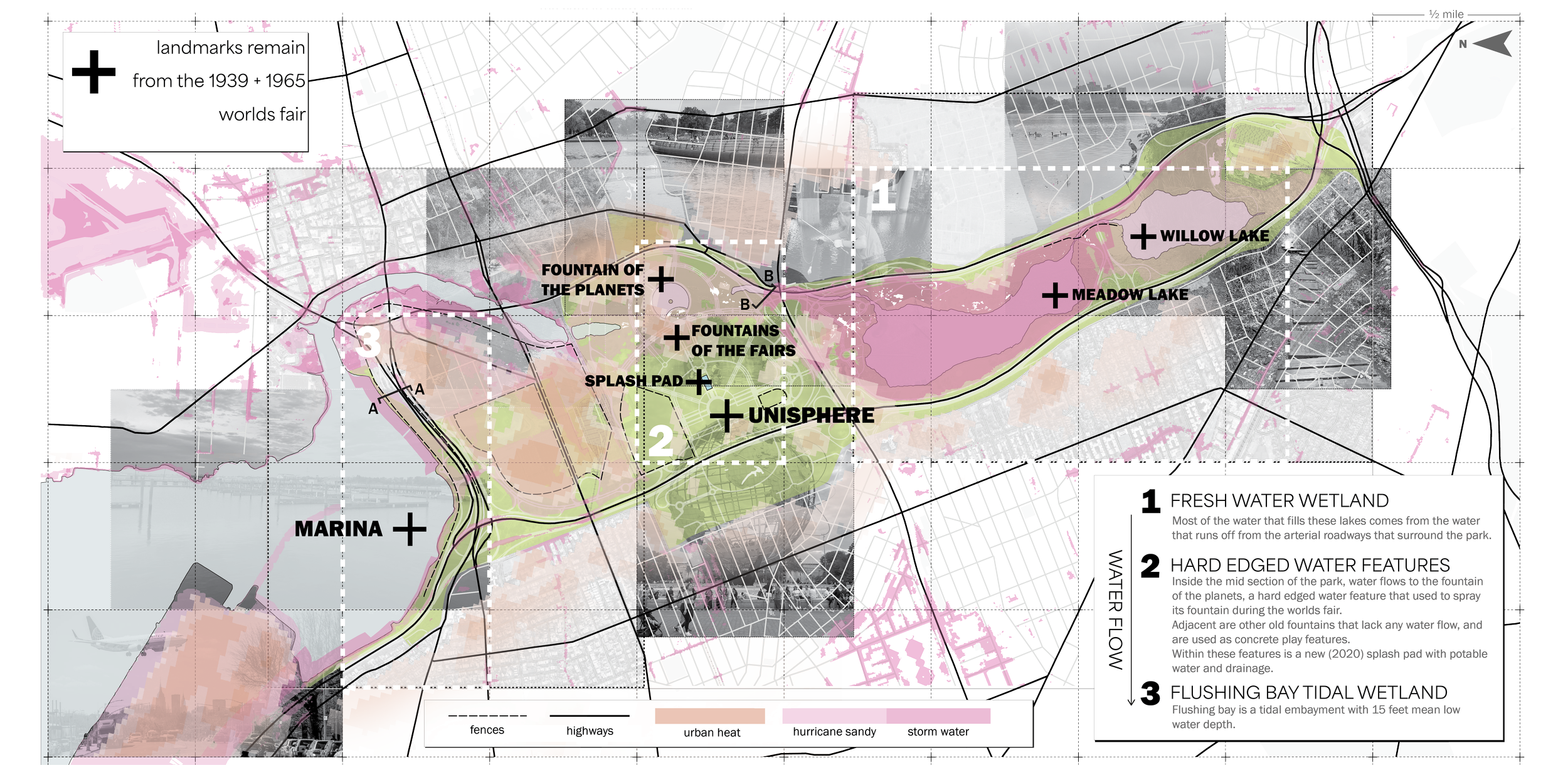
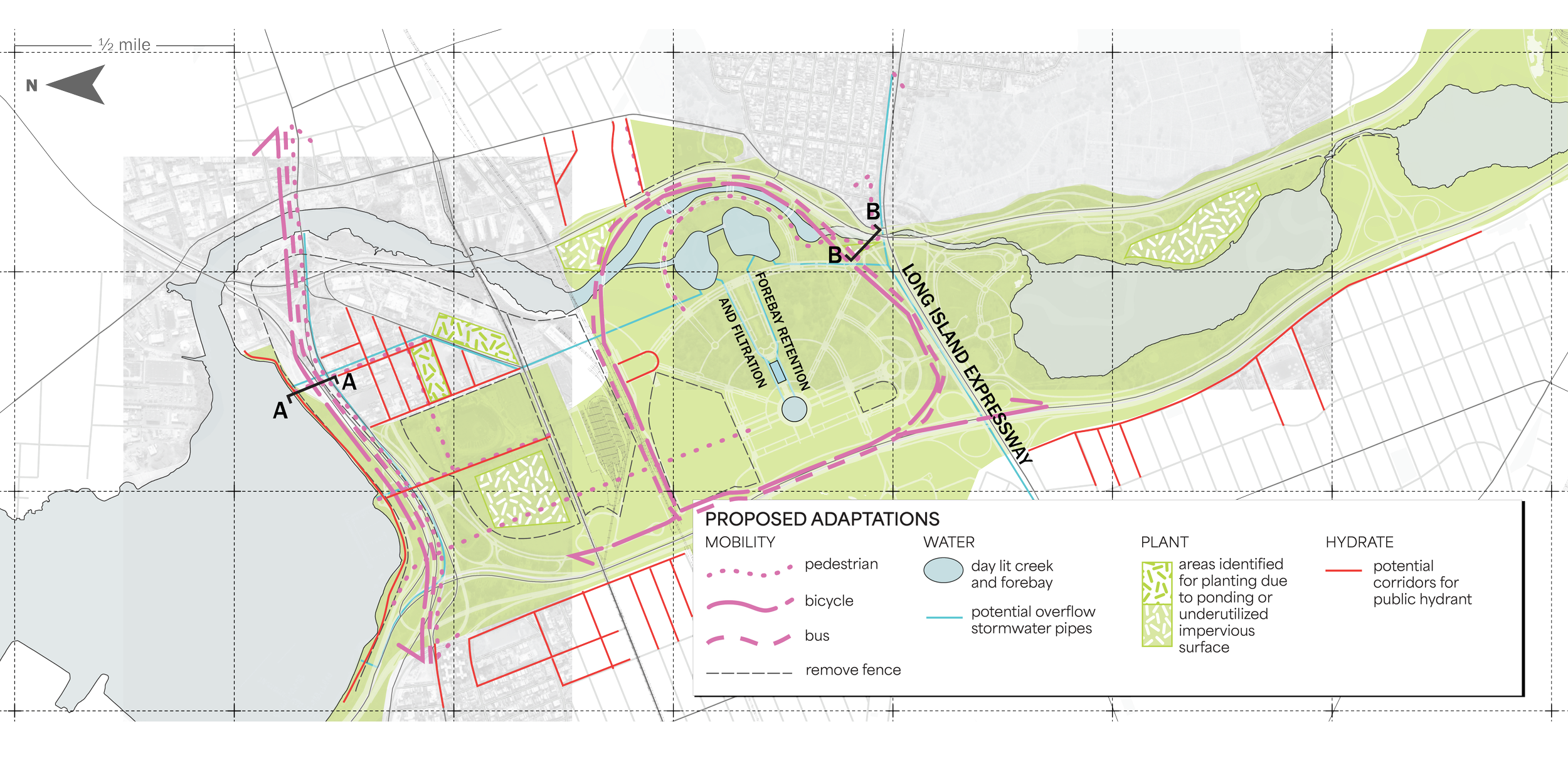
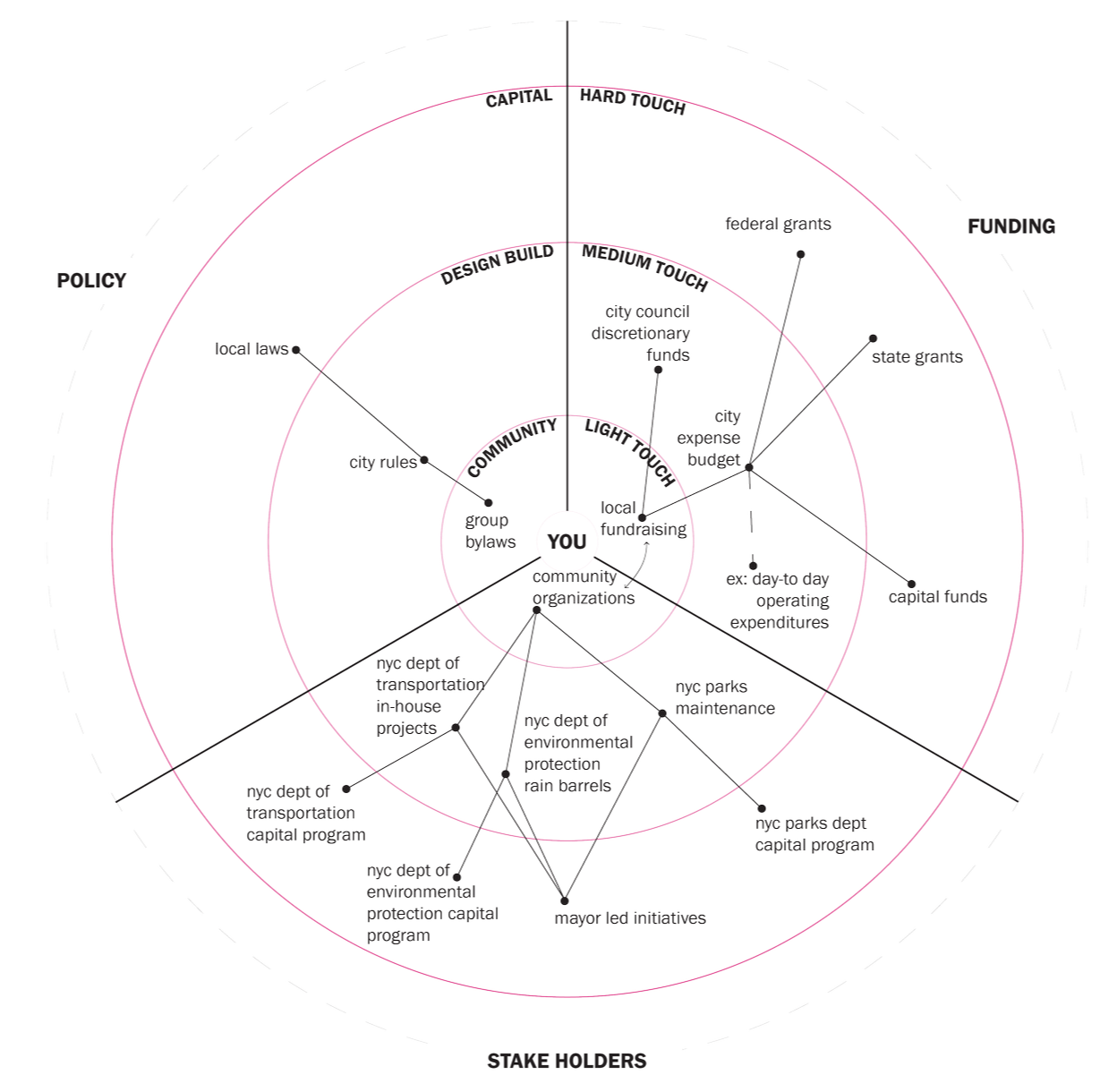
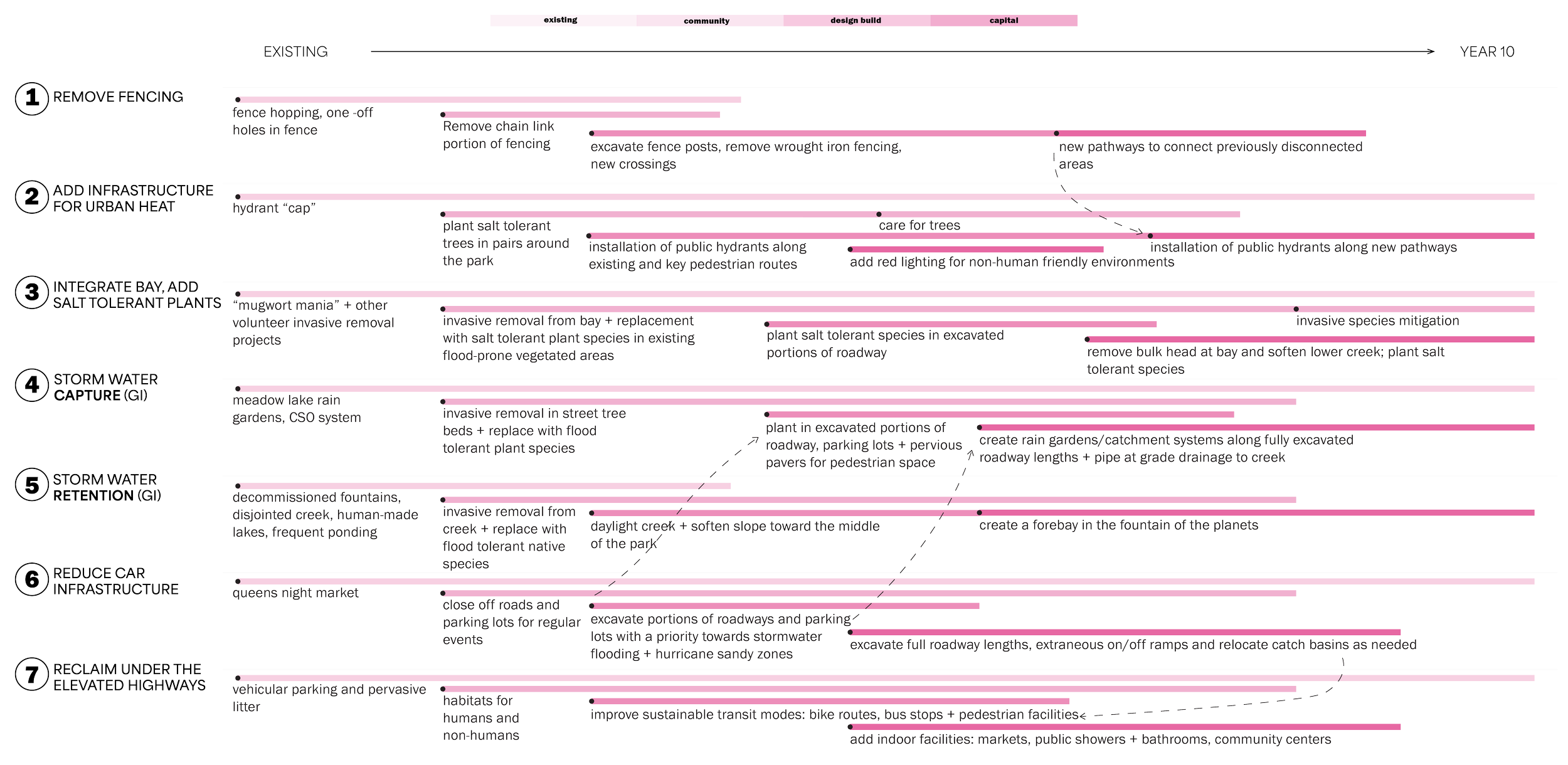
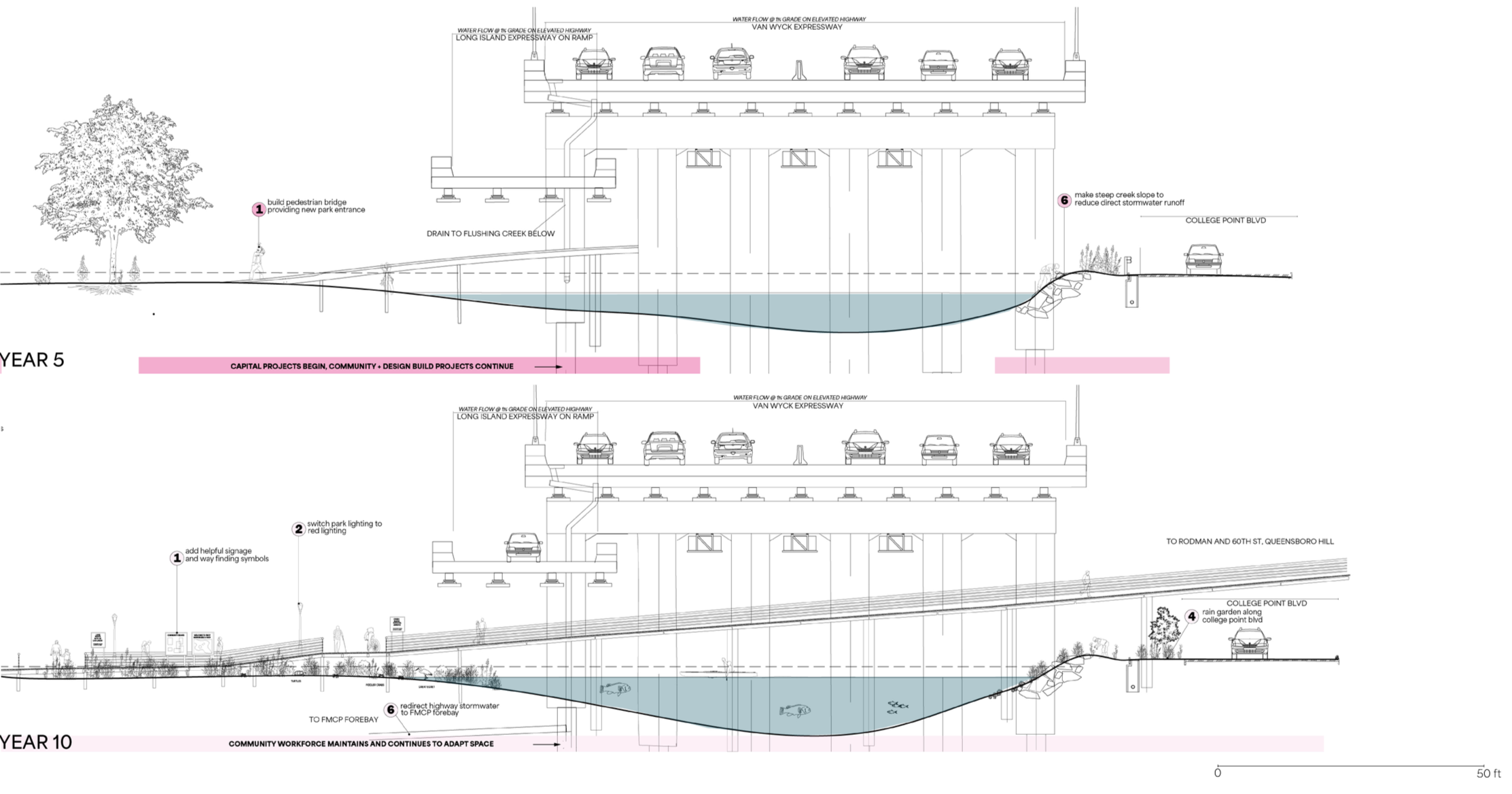
The full adaptation takes 10 years. Each of the seven projects addresses a barrier identified in the park, such as fences, stormwater flooding, or polluted water.
This process would result in a park with minimal barriers, an engaged community, and cleaner water.
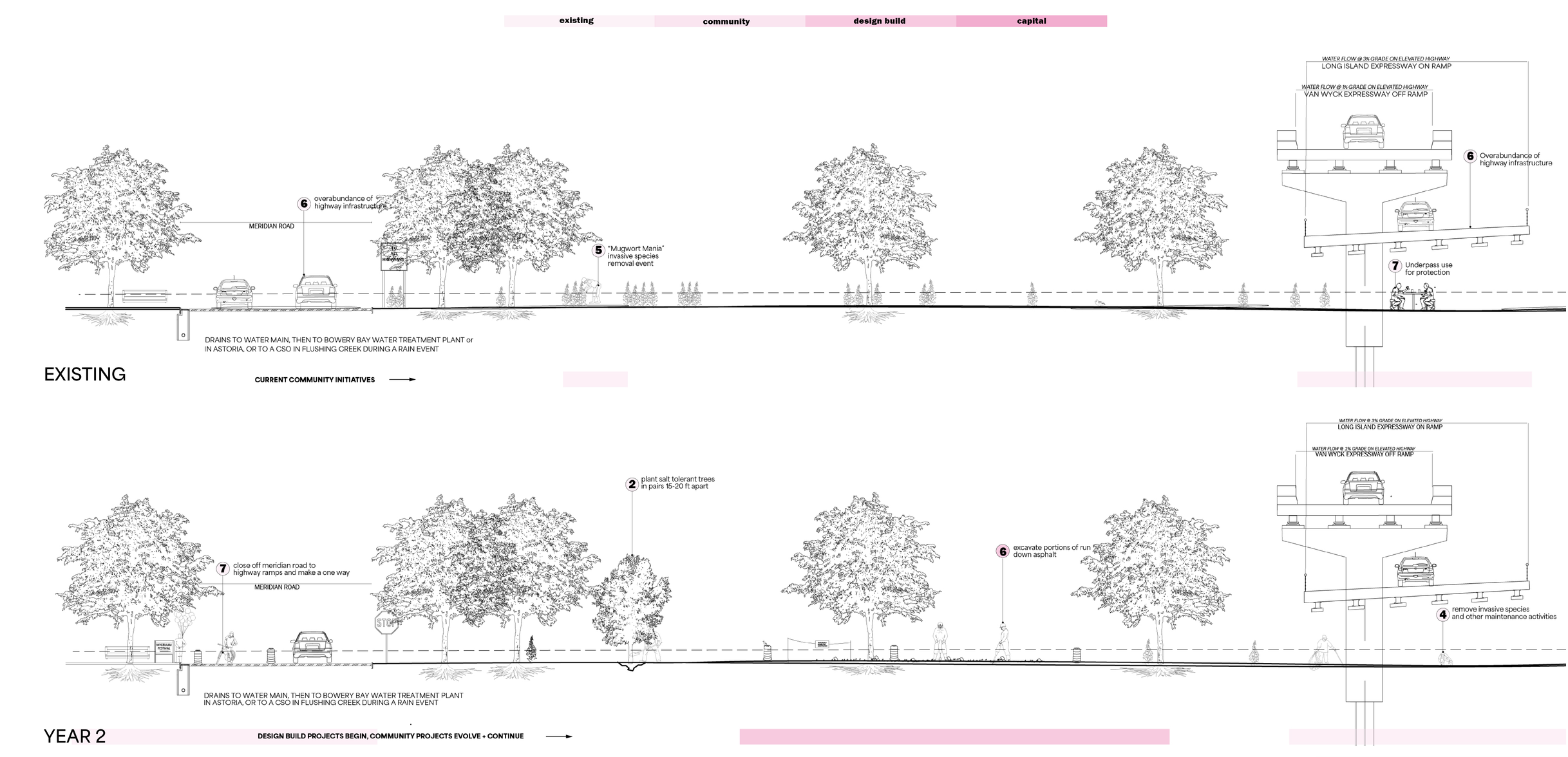
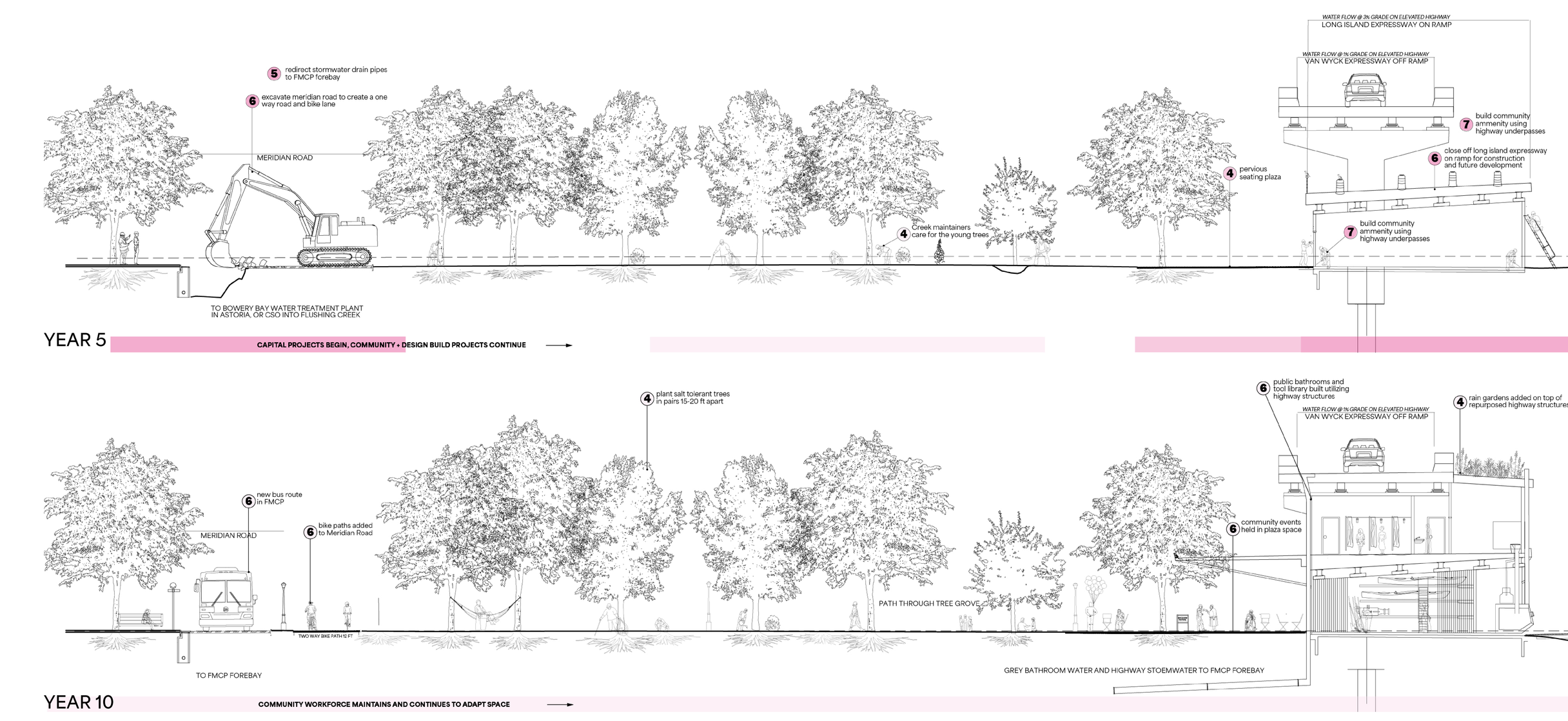
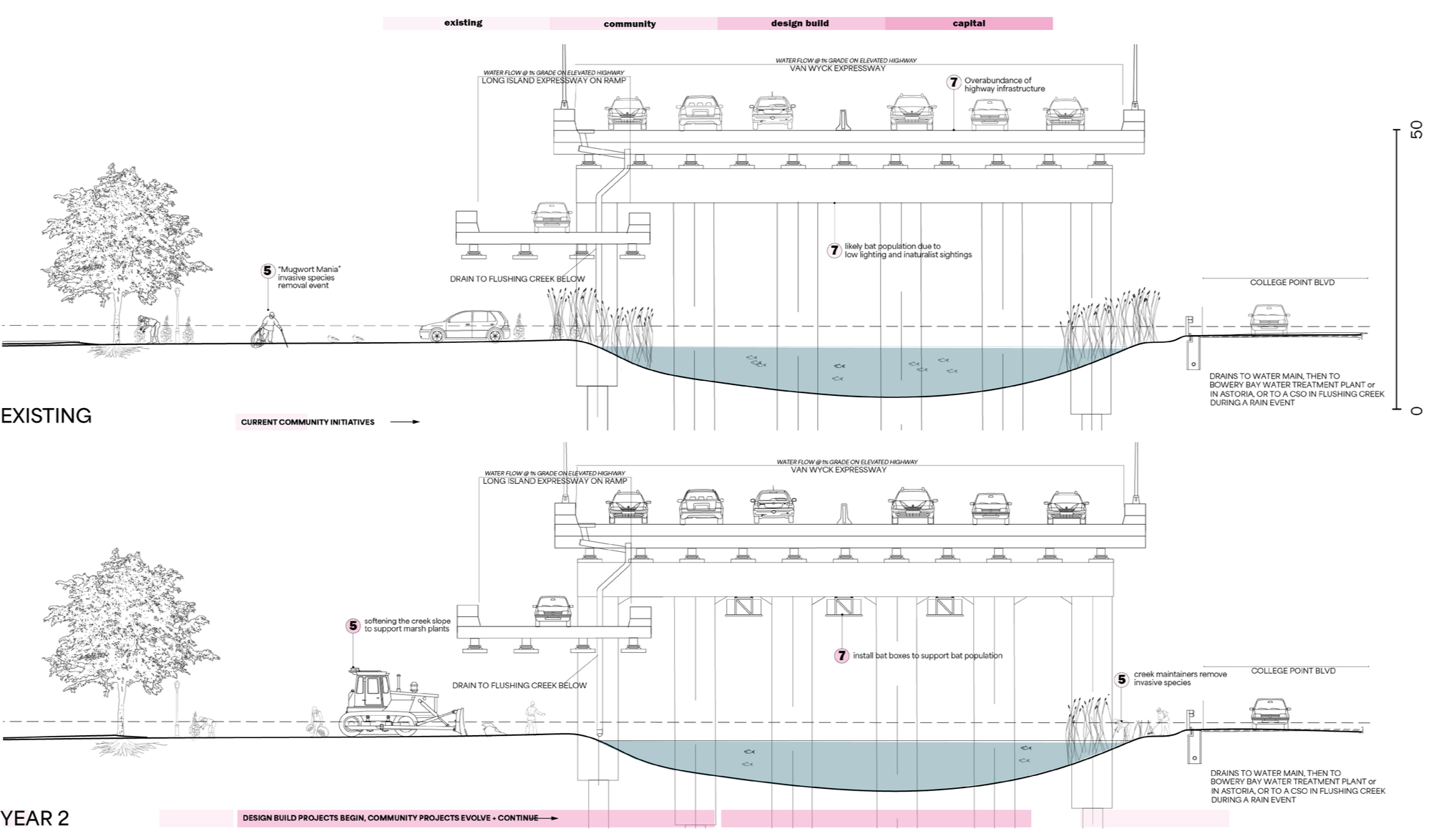
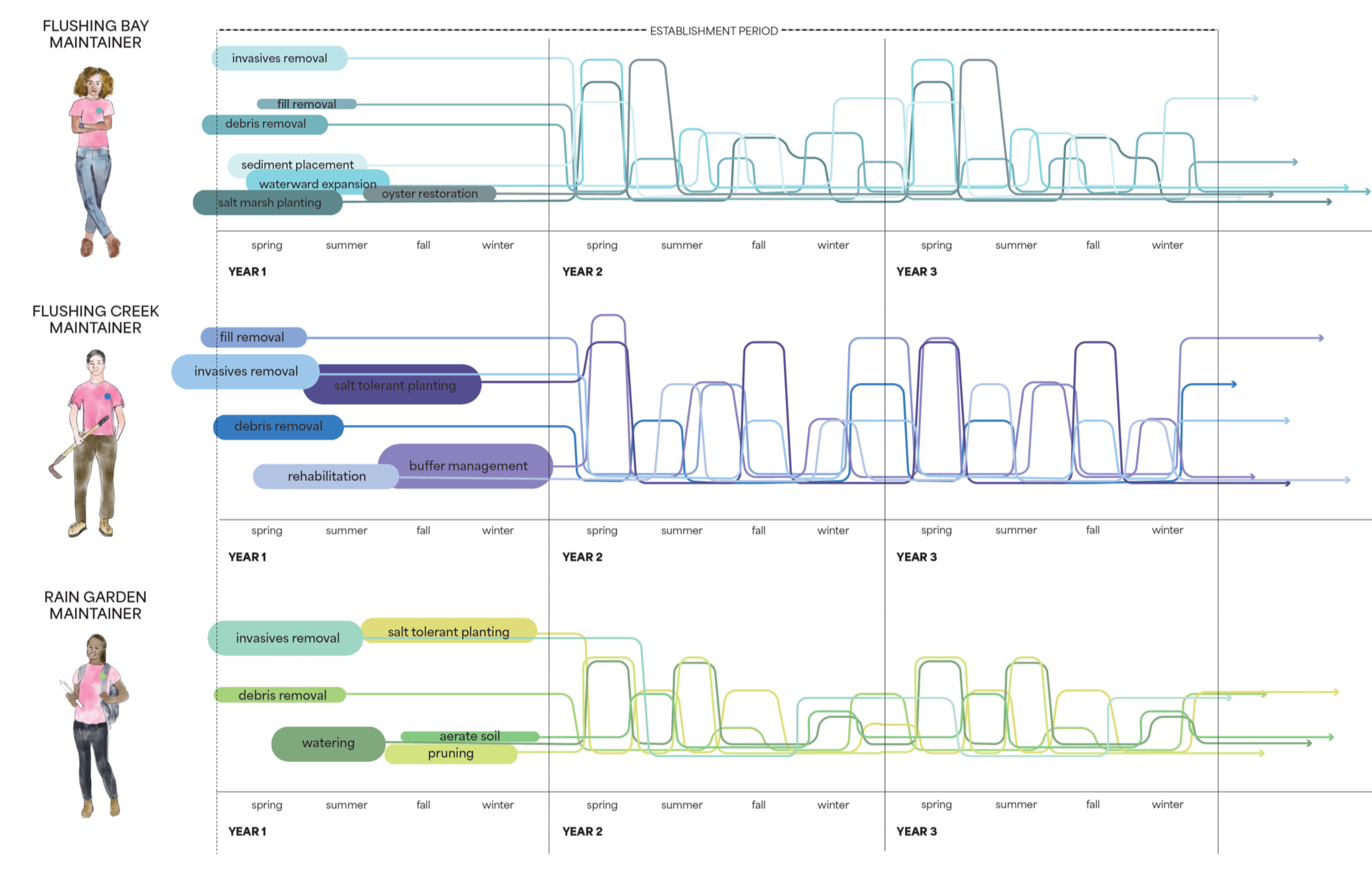
The FMCP Maintainer Workforce is to be recruited from nearby neighborhoods. They would be paid to be trained in green workforce jobs, lead other community volunteers interested in maintaining the park, and care for the various natural areas of the park in the long term. The FMCP Maintainer Workforce program cultivates a culture of local management and placemaking that would not only be beneficial for community members, but for the green and blue areas in their neighborhood.
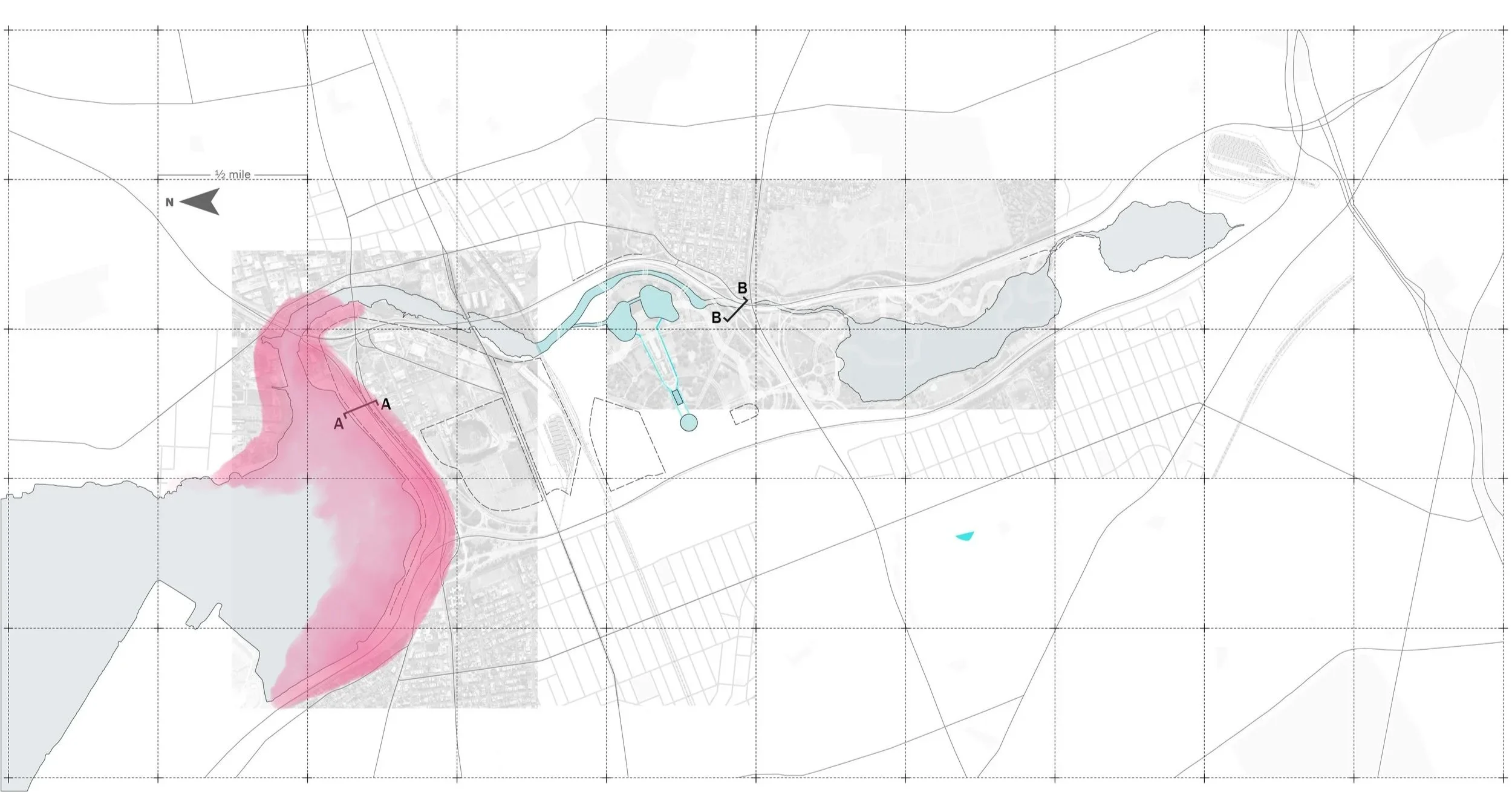
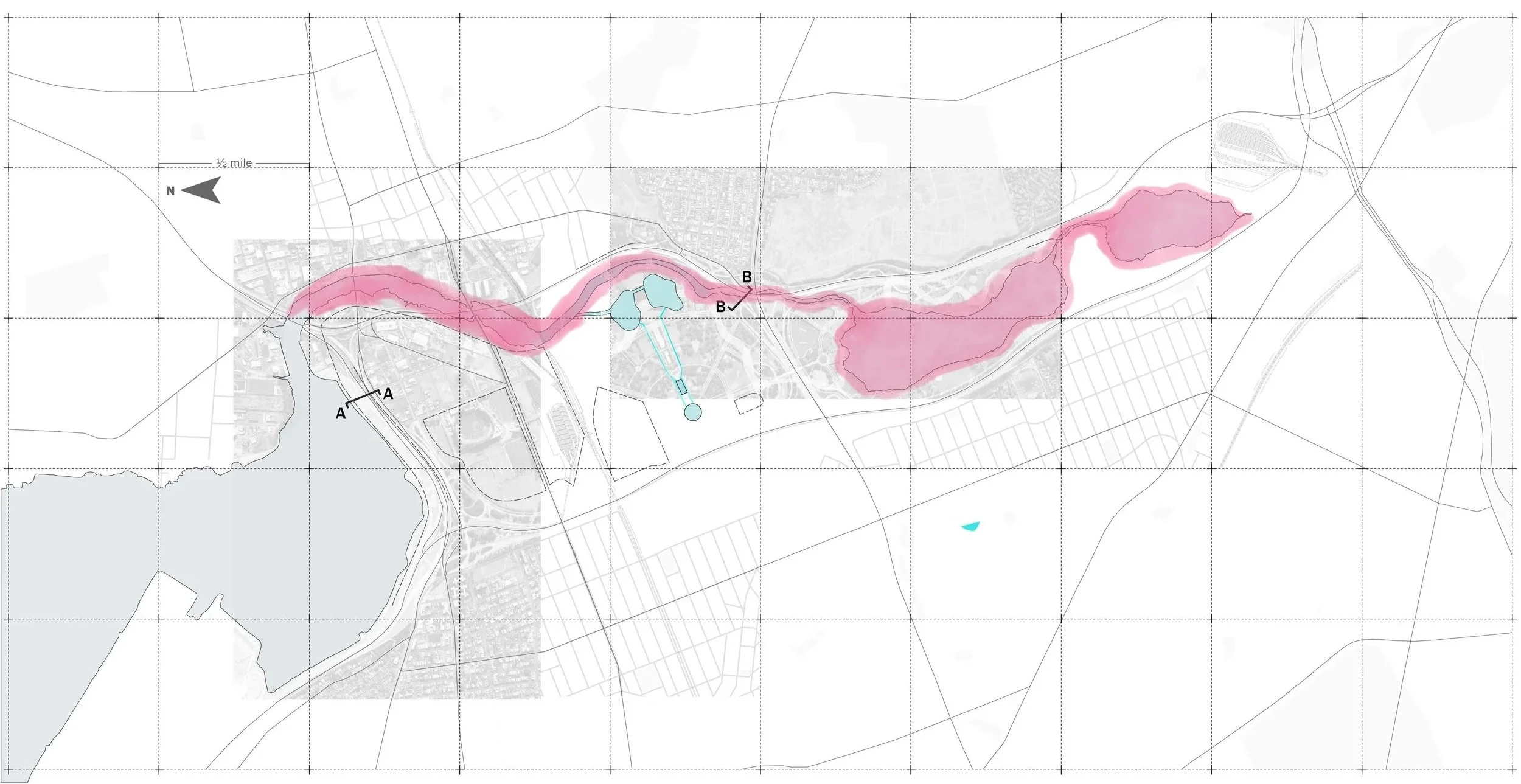
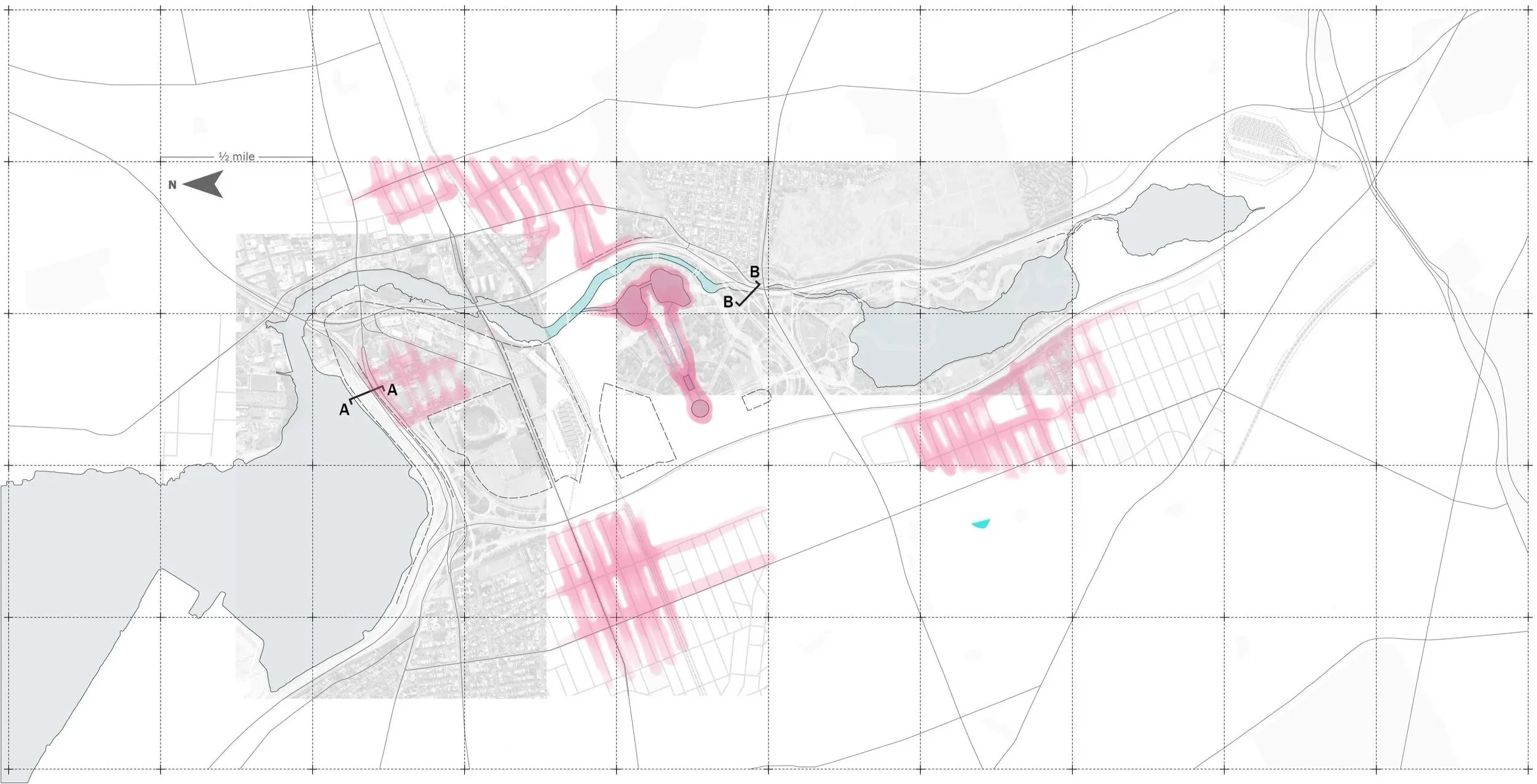
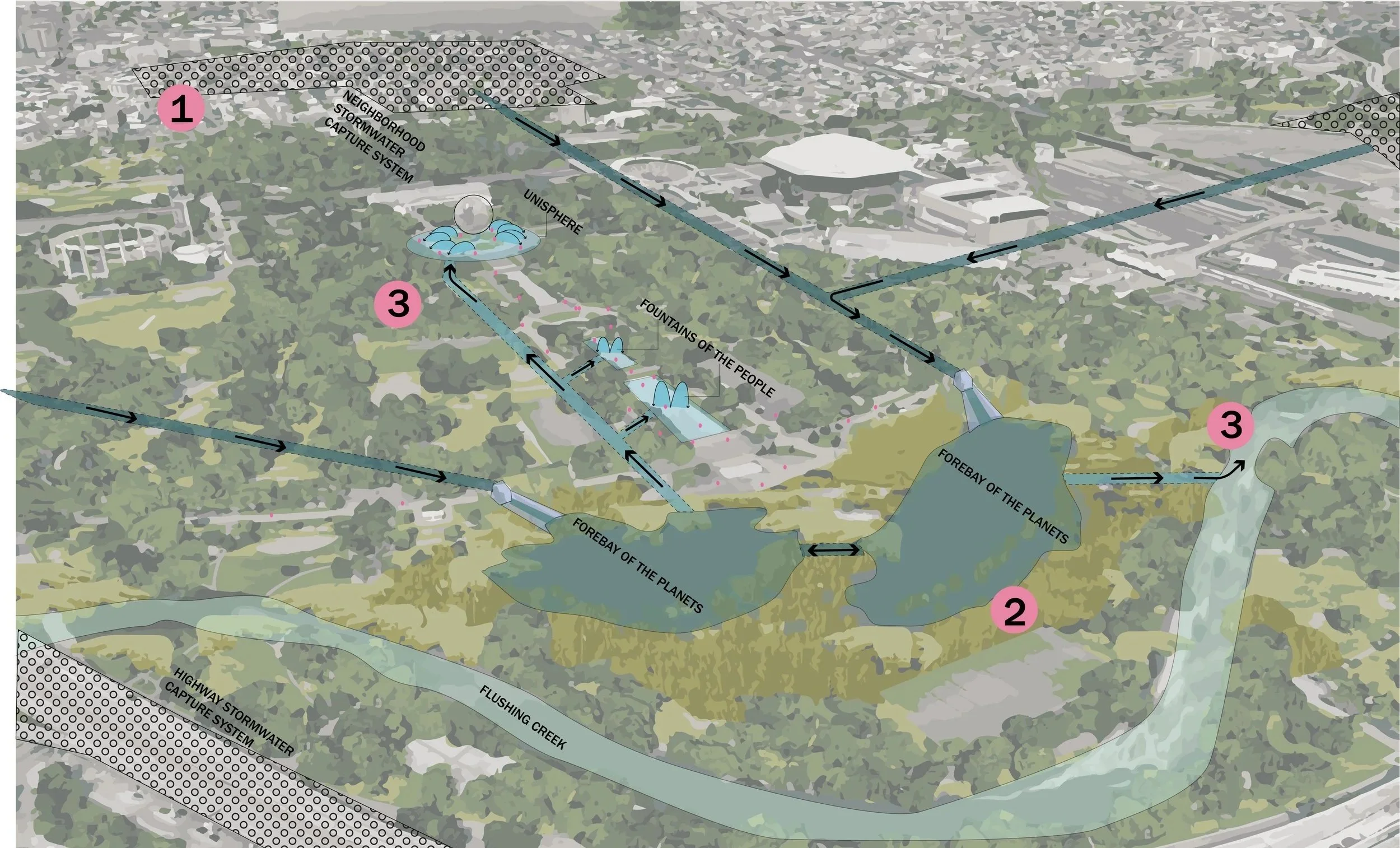
The 10 year process would result in a water cycle that activates the fountains in the park, in particular the Iconic Unisphere fountain found in the middle of the park, bringing healing connections to water.
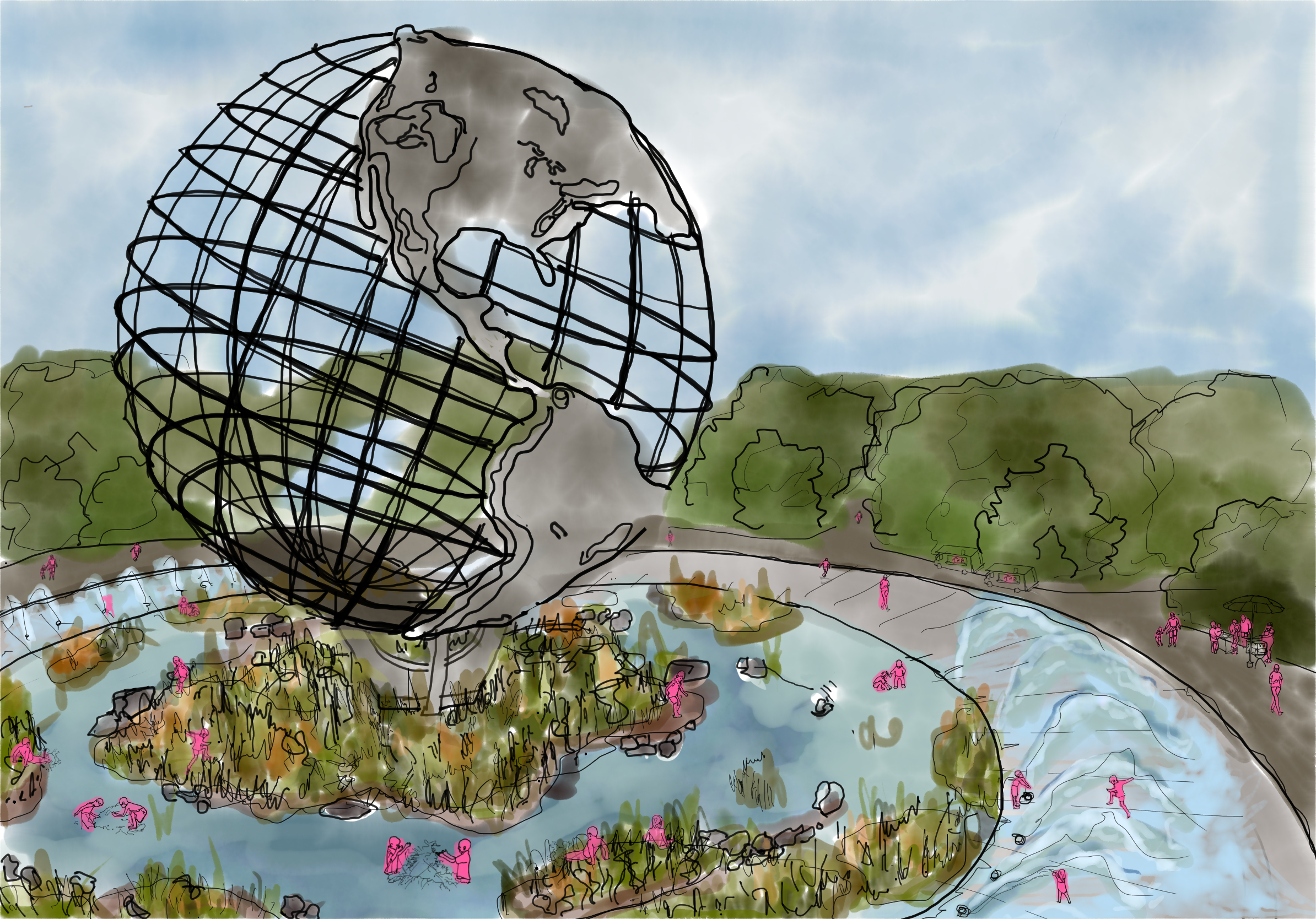
CREATED IN COLLABORATION WITH CASSANDRA CASTANO
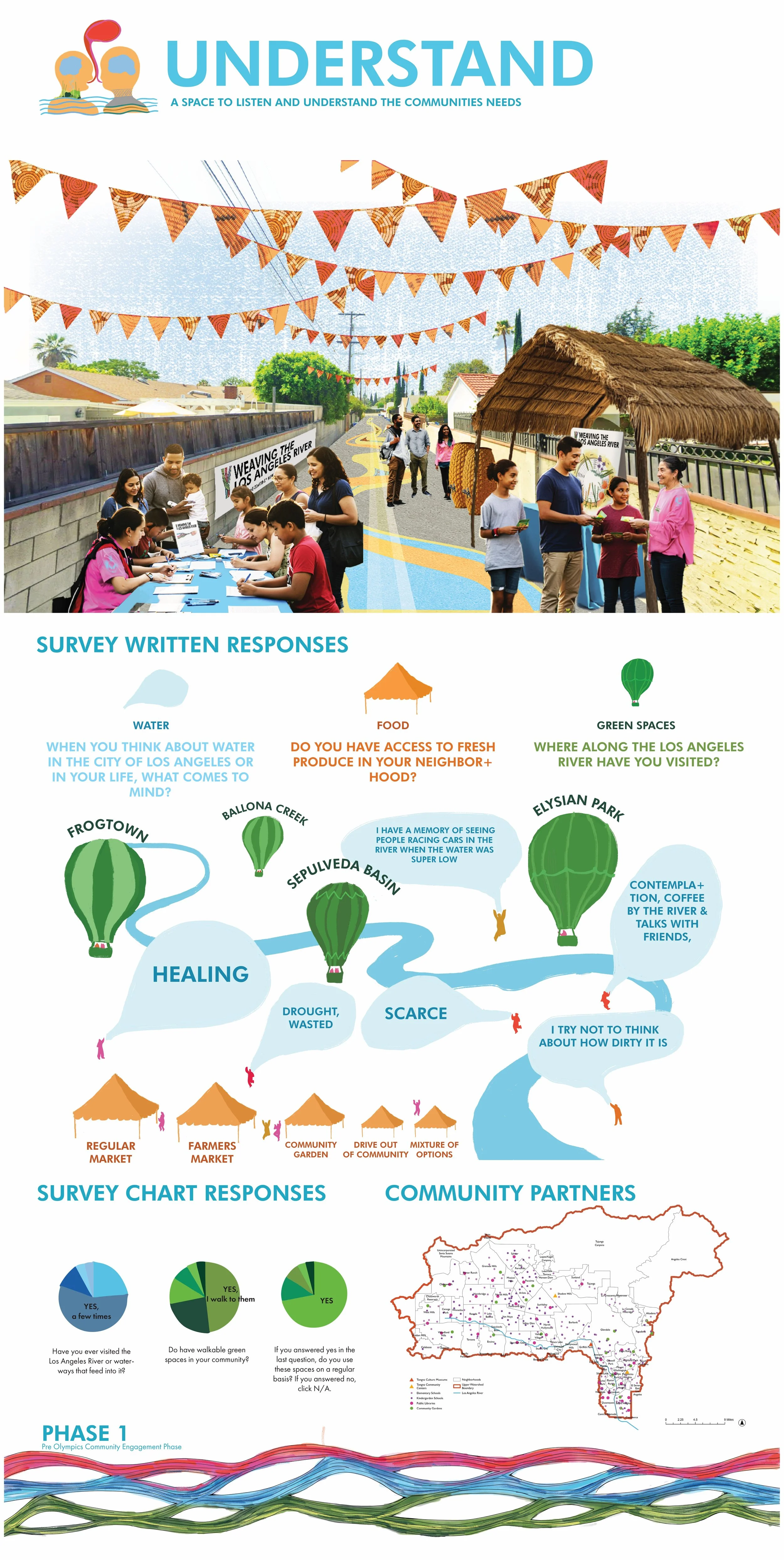
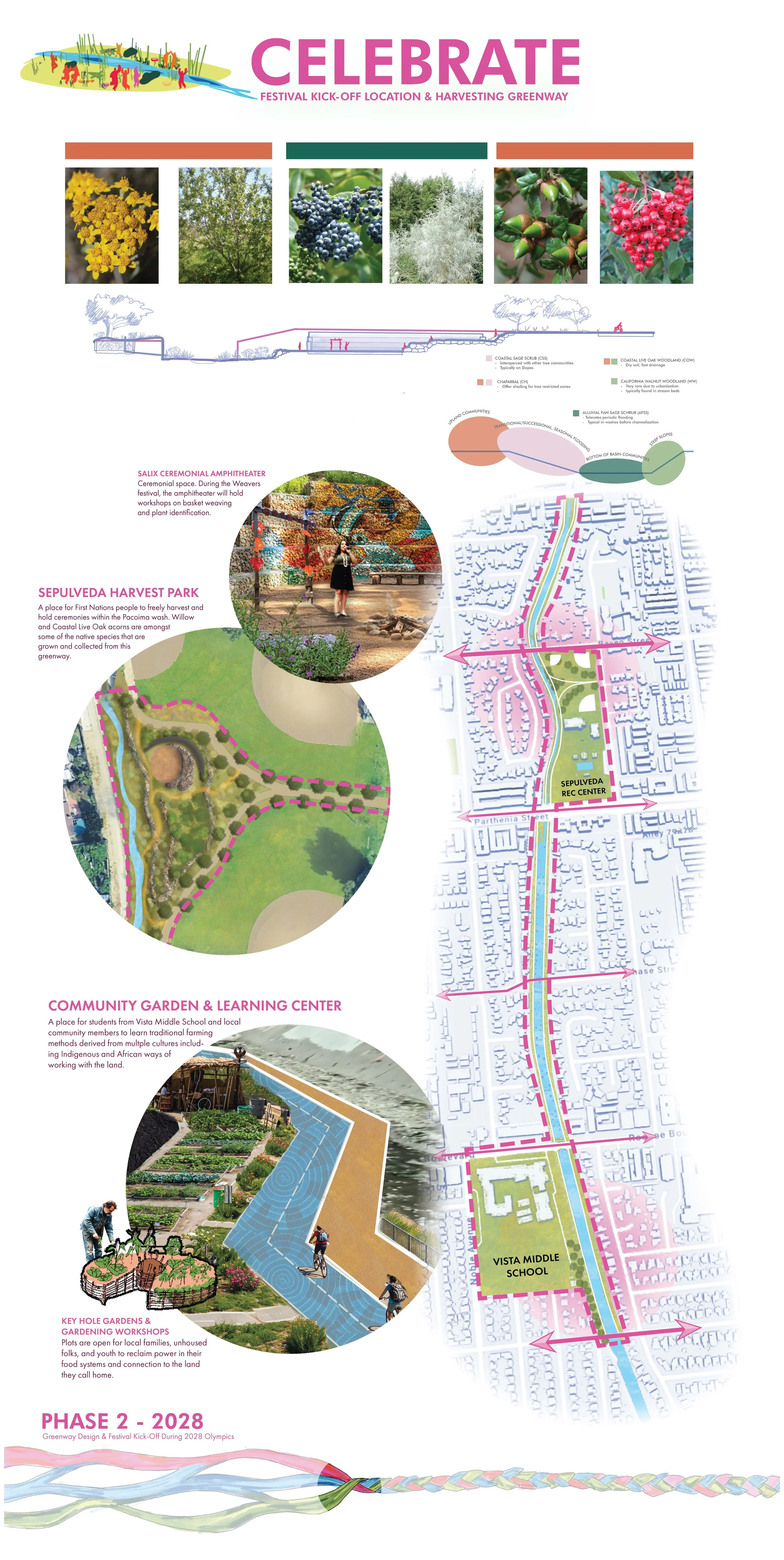
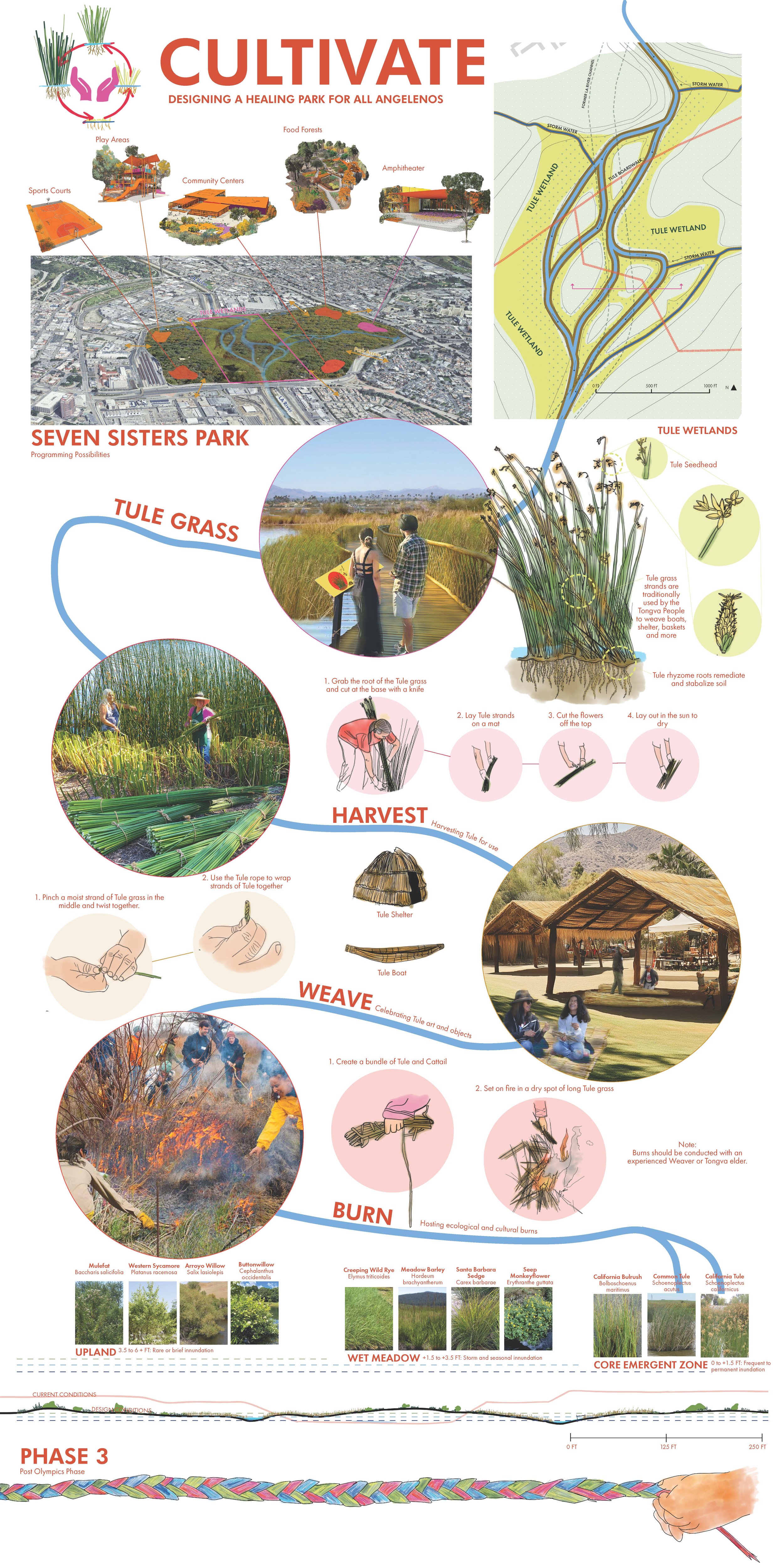
A plan to weave community in the watershed. A speculative community engagement plan to reimagine the restoration of the Los Angeles River as a regenerative public corridor, weaving ecological function, indigenous and immigrant cultural memory, and community space along its channelized banks.
Weaving the Los Angeles River
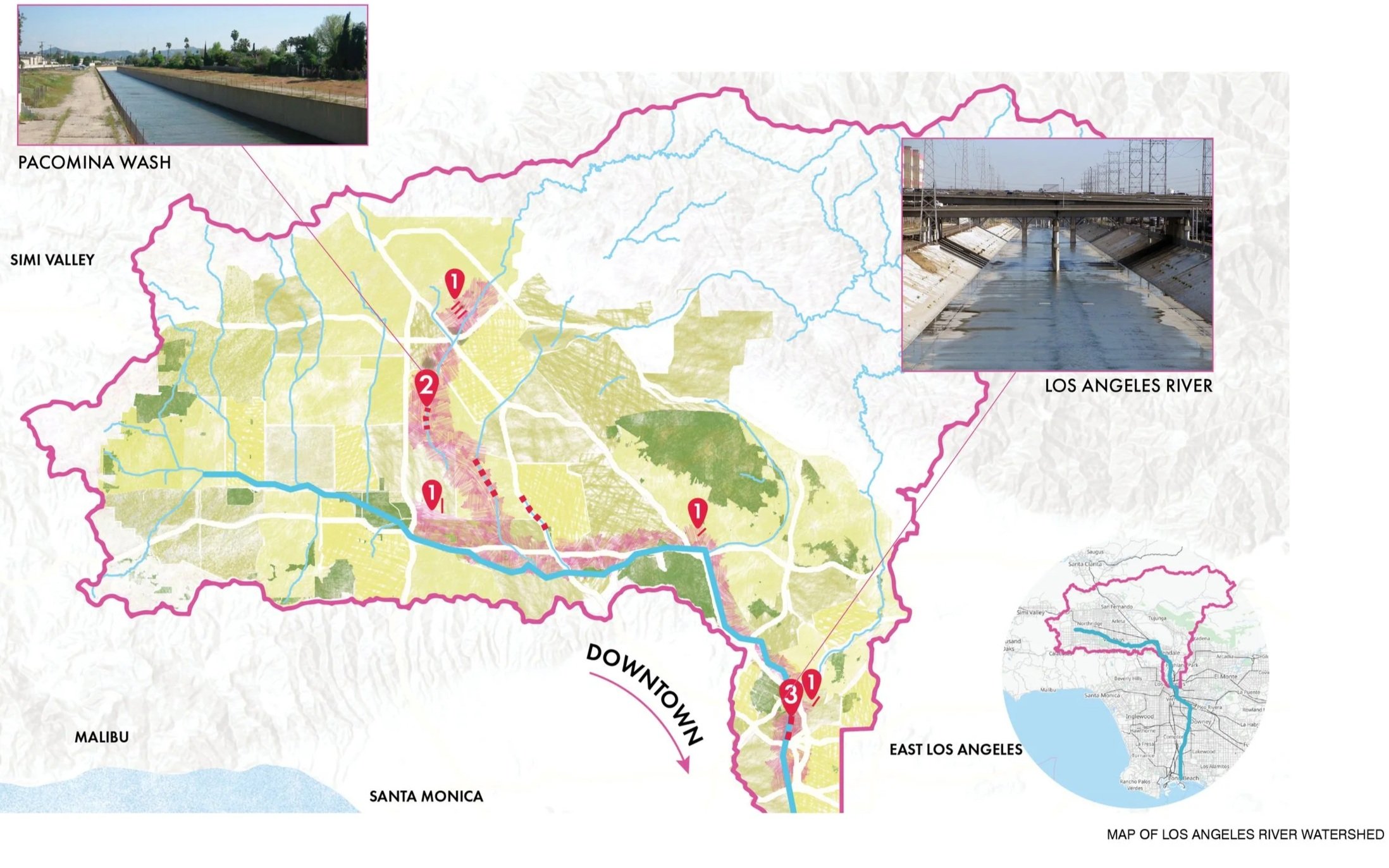
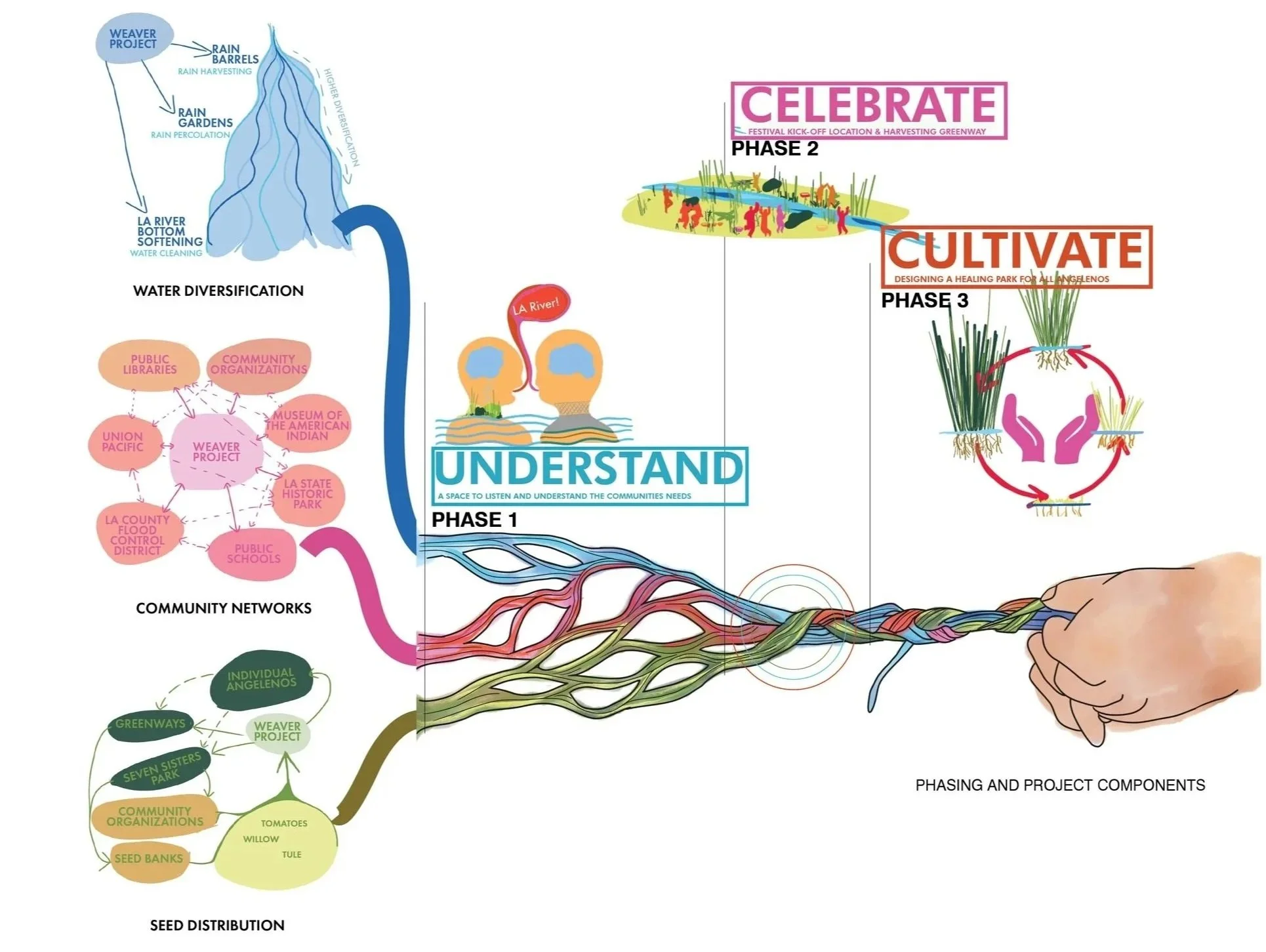
Phase one is a period of time to understand our communities’ relationships to water, plants, and other cultural aspects of the Los Angeles basin.
Phase two celebrates the end of intentionally understanding our Los Angeles River Watershed and transitioning to celebrating spaces that connct us to our river in more ways than one!
Phase three works on re-building our relationship with the Los Angeles River in the long-term, we look to restore native tule habitat.